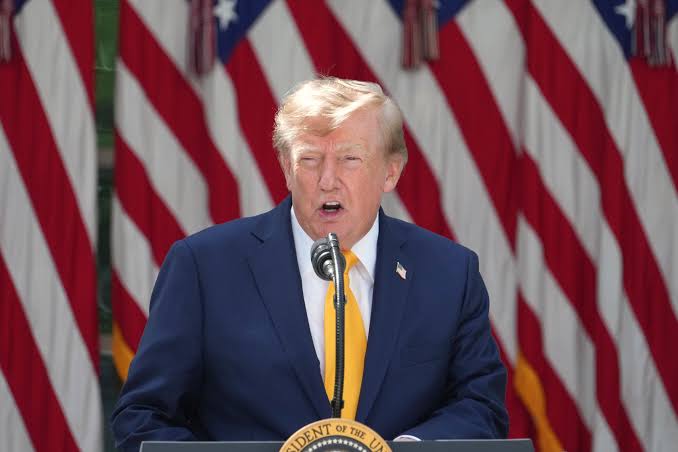
President Donald Trump is returning to Texas for the third time in a month, an unusual level of attention for a state that has long been considered one of the Republican Party’s most dependable strongholds.
Trump is traveling to San Antonio to campaign alongside Republican Senate candidate Ken Paxton as the November 3 midterm elections approach. The repeated visits illustrate how dramatically the political environment has changed since Trump carried Texas by approximately 14 percentage points in the 2024 presidential election.
At the center of the concern is the race between Paxton, Texas’ longtime attorney general, and Democratic candidate James Talarico.
Recent polling has shown a competitive contest. A Siena College poll released October 3 showed Talarico leading Paxton 51% to 45% among likely voters. Polls are snapshots rather than predictions, but the numbers have helped turn a race Republicans once expected to control comfortably into a major focus of national spending and campaigning.
The stakes are particularly important because Republicans hold a narrow Senate majority.
Trump personally helped shape the contest by supporting Paxton over longtime Republican Senator John Cornyn during the party’s primary runoff. That endorsement makes the outcome especially connected to Trump’s influence within the Republican Party.
Their political alliance, however, has occasionally appeared uncomfortable.
Paxton was recorded telling donors that Republican candidates’ numbers declined after a Trump-centered convention in Dallas. His campaign disputed interpretations that he was criticizing the president.
Trump, meanwhile, recently described Paxton as difficult at times while simultaneously stressing how important his victory would be for Republicans.
The party is spending heavily to protect the seat. Trump-aligned organizations and other Republican groups have poured tens of millions of dollars into Texas, an extraordinary commitment for a state that has not elected a Democratic U.S. senator since 1988.
Texas Republicans are also defending competitive House districts.
In San Antonio, Republican Carlos De La Cruz is campaigning in a newly redrawn congressional district created during a Republican-led redistricting process. Democrats have criticized the map as partisan gerrymandering, while Republicans are hoping the new boundaries will strengthen their position in Congress.
The broader political environment helps explain the urgency.
Seemingly, data shows Trump’s national approval rating at 32%, while Democrats led Republicans 44% to 37% among registered voters.
Economic concerns remain particularly important. Voters continue expressing frustration over living costs, while the war with Iran has added another major issue to the campaign.
Hispanic voters could be especially significant in Texas.
Trump made substantial gains among Hispanic voters during the 2024 presidential election, winning nearly half of their votes nationally. The latest Ipsos survey, however, found only 24% of Hispanic Americans approving of his job performance.
That shift could matter greatly in Texas, where Hispanic voters represent a much larger portion of the electorate than in most states.
Trump’s repeated appearances therefore represent both an opportunity and a risk for Republican candidates.
His rallies can energize loyal supporters and increase turnout among the voters who helped deliver his 2024 victory. But his presence could motivate opponents or complicate efforts to win independents.
Texas Governor Greg Abbott, another Trump ally facing a closer-than-expected reelection contest, is not expected to attend the San Antonio rally, citing other campaign commitments.
The larger significance of Trump’s third Texas visit is therefore not simply the rally itself.
It is that Republican leaders are devoting presidential appearances, advertising money and national political resources to defending territory they once expected to hold easily.
Texas remains Republican-leaning, but the intensity of the campaign demonstrates how economic dissatisfaction, changing voter coalitions and a difficult national environment have expanded the 2026 midterm battlefield into places that only two years ago appeared safely beyond Democratic reach.