
A growing divide is emerging within the Democratic Party over how to frame the political debate around artificial intelligence, as leaders increasingly emphasize affordability while critics argue that approach sidesteps more fundamental concerns. The discussion reflects broader tensions about how to communicate complex technological change to voters ahead of key elections.
Many Democratic leaders are now positioning AI as an economic tool that could help lower everyday costs. Their messaging focuses on how automation and productivity gains might reduce expenses in areas like healthcare, housing, education, and consumer services. Strategists believe this “affordability-first” framing resonates more strongly with voters, especially at a time when cost-of-living concerns dominate public opinion. By tying AI to tangible economic benefits, Democrats hope to make a highly technical issue more accessible and politically relevant.
This approach also aligns with a broader party-wide emphasis on affordability as a central campaign theme. Across Congress, Democrats have introduced policy agendas aimed at lowering costs for essentials such as prescription drugs, childcare, housing, and utilities. Some proposals even address AI directly, including efforts to prevent companies from using artificial intelligence to engage in “surveillance pricing,” where consumer data is used to dynamically raise prices.
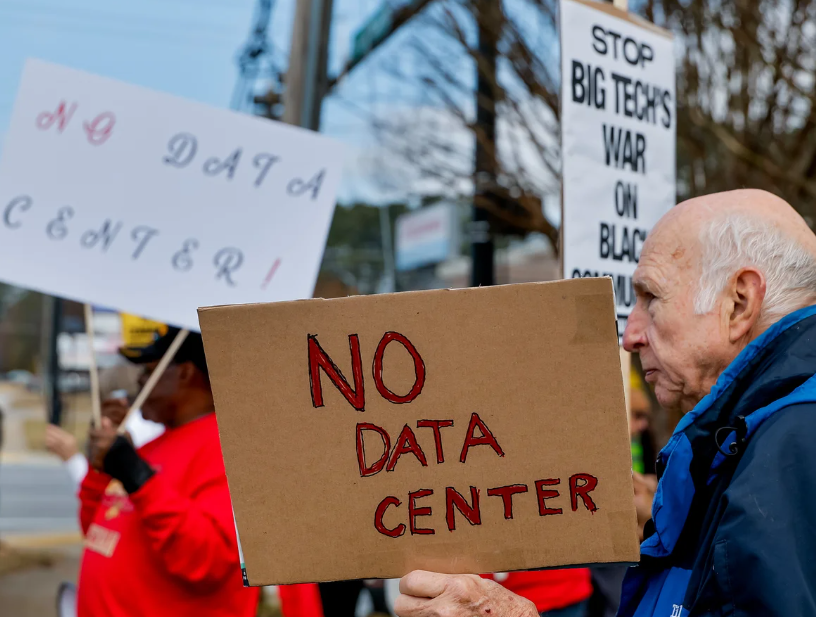
However, critics within and outside the party argue that focusing primarily on affordability risks oversimplifying the challenges posed by AI. They contend that the technology raises deeper structural issues that cannot be reduced to consumer prices. Among the biggest concerns are the concentration of power among large technology companies, the potential for widespread job displacement, and the growing use of AI in surveillance and data collection.
Some progressive voices warn that by emphasizing affordability, Democratic leaders may be avoiding a tougher political confrontation with Big Tech. These critics argue that a more robust debate should include regulation of corporate power, stronger labor protections, and safeguards against the misuse of personal data. They also stress that AI’s long-term impact on inequality could be profound, potentially widening the gap between those who benefit from technological advances and those who are displaced by them.
The disagreement reflects a strategic dilemma. On one hand, affordability is a politically effective message that connects directly with voters’ daily experiences. On the other hand, AI is a transformative technology with far-reaching implications that may require more comprehensive policy responses. Balancing these two realities—clear messaging and substantive policy—has become a central challenge for Democratic leaders.
The debate is also unfolding in a broader political context where AI policy is still in its early stages. Congress has yet to pass sweeping legislation governing artificial intelligence, leaving many key questions unresolved. As a result, both parties are still shaping their narratives around the issue, with Democrats attempting to position themselves as focused on economic relief while also grappling with calls for stronger oversight.
Ultimately, the conversation highlights a critical moment in the politics of technology. As AI continues to reshape the economy, the question is not just how it will be regulated, but how it will be explained to the public. Whether the focus on affordability proves effective—or insufficient—may determine how voters respond to one of the most important technological shifts of the modern era.