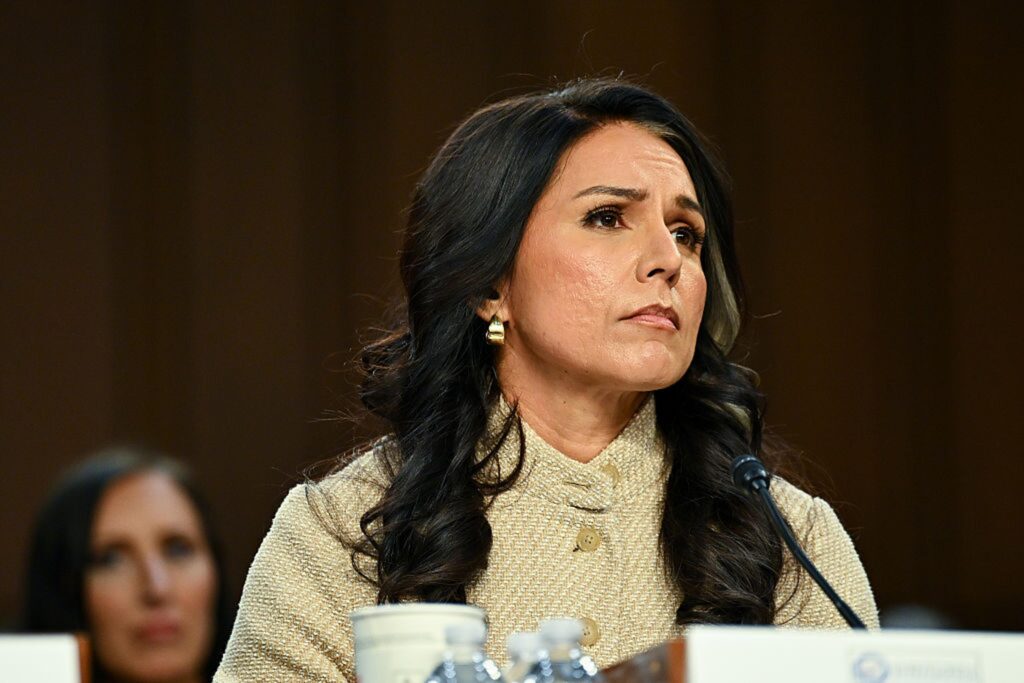
Tulsi Gabbard is stepping down as Director of National Intelligence, ending a brief but turbulent tenure at the center of President Donald Trump’s national security team. Gabbard’s last day will be June 30, 2026, because she cited her husband’s diagnosis with a rare form of bone cancer as the reason for leaving government service. Her deputy, Aaron Lukas, is expected to serve as acting director after her departure.
Gabbard’s resignation closes one of the most controversial chapters of Trump’s second-term cabinet. A former Democratic congresswoman, Army Reserve officer and 2020 presidential candidate, she became an important pro-Trump figure after breaking with the Democratic Party and endorsing Trump in 2024. Her appointment to lead the intelligence community was controversial from the start because critics questioned her intelligence experience and pointed to her past foreign-policy positions, including skepticism of U.S. military interventions and past comments on Russia, Syria and surveillance.
As intelligence chief, Gabbard was responsible for overseeing 18 U.S. intelligence agencies and advising the president on major security threats. But she was often sidelined from key national-security decisions, especially on major issues involving Iran and Venezuela. That was striking because the Director of National Intelligence is supposed to be one of the president’s top sources of coordinated intelligence analysis. Instead, Gabbard’s influence appeared limited during some of the administration’s most consequential foreign-policy moments.
Her tenure was also marked by internal conflict and criticism over how she handled the intelligence community. Gabbard tried to restructure the Office of the Director of National Intelligence through an initiative known as ODNI 2.0, with a stated focus on counterterrorism, border security and restoring trust. Supporters described the effort as a needed reform of an agency they believed had become too politicized. Critics argued the changes weakened institutional independence, damaged morale and made intelligence work more vulnerable to political pressure.
The Iran conflict became one of the clearest examples of tension between Gabbard and the White House. She was excluded from important decision-making around the Iran war, even though intelligence assessments were central to the debate over Tehran’s military and nuclear capabilities. Her office also faced scrutiny after aides and officials clashed over policy direction, intelligence conclusions and the administration’s public messaging.
Gabbard also drew criticism for pursuing politically charged investigations and actions, including work tied to Trump’s claims about voter fraud and efforts to revoke security clearances from intelligence professionals. Democratic lawmakers argued that these moves risked turning intelligence into a political weapon. Her defenders, however, said she was trying to expose abuses and challenge what they viewed as an entrenched intelligence bureaucracy hostile to Trump.
Her resignation adds to a wider pattern of turnover inside Trump’s cabinet. Several senior officials have left in recent months, reinforcing the impression of instability within the administration. For Gabbard personally, the stated reason for departure is family health. Politically, however, her exit also reflects how difficult it became for her to operate inside an administration where she was both symbolically important to Trump’s movement and reportedly marginalized on core security decisions.
Overall, Gabbard’s departure ends a tenure defined by contradiction. She entered office promising to reform intelligence and restore public trust, but she left amid questions about politicization, influence and internal dysfunction. Her resignation now opens another major national-security vacancy at a moment when U.S. intelligence agencies face intense pressure from global crises and domestic political battles.