
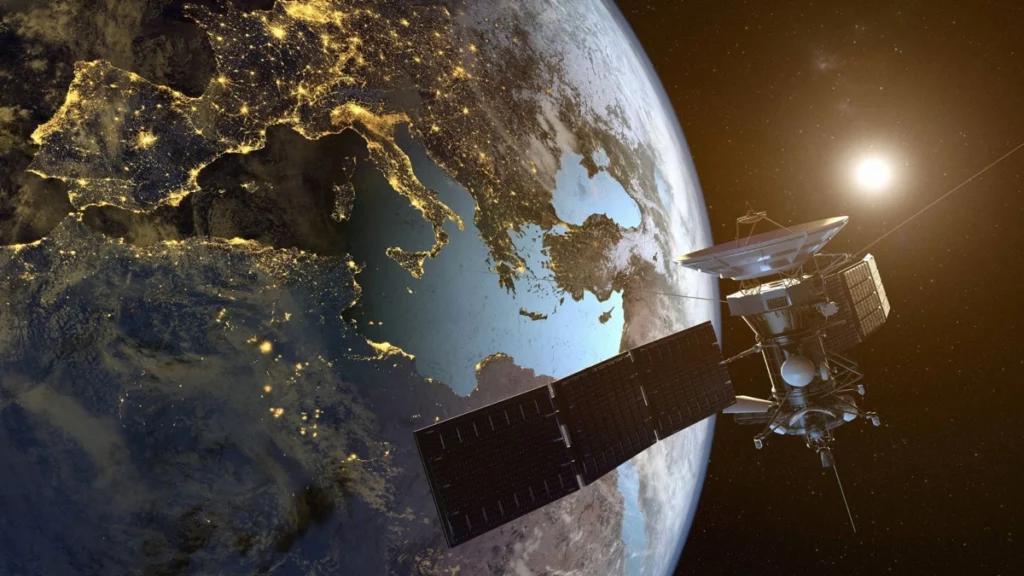
Amazon has agreed to acquire satellite company Globalstar in an $11.57 billion deal, a major move that strengthens its effort to challenge Elon Musk’s Starlink in the fast-growing market for satellite-based connectivity. The acquisition gives Amazon control of Globalstar’s direct-to-device satellite technology and adds its existing two dozen satellites to Amazon’s broader low-Earth-orbit network, which is still in an earlier stage of deployment than SpaceX’s system. The deal was closed today and said it marks one of Amazon’s boldest steps yet in trying to close the gap with Starlink.
The competitive backdrop is important. Starlink already has a huge lead, with a network of roughly 10,000 satellites and more than 9 million users globally, while Amazon is still building out Project Kuiper and preparing to launch its satellite internet services later in 2026. Amazon plans to deploy about 3,200 satellites by 2029, with roughly half required to be in place by a regulatory deadline in July. That means the Globalstar acquisition does not suddenly put Amazon on equal footing with Starlink, but it does give Amazon a meaningful strategic asset in one of the most promising parts of the satellite market.
A key part of the deal is direct-to-device, or D2D, connectivity. Globalstar’s network is built for reliable low-data communication directly with mobile devices, which means phones and watches can connect through satellites without relying on ground-based cellular towers. That makes the technology especially valuable for emergency services and for coverage in places where traditional networks are weak or absent. Amazon expects the deal to help it deploy D2D services beginning in 2028. Industry analyst Armand Musey said that Amazon had been falling behind Starlink in satellite broadband, but that buying Globalstar gives Amazon a chance to catch up on D2D spectrum position and move ahead on D2D deployment.
The acquisition also has implications for Apple. Globalstar currently powers satellite-based safety features such as Emergency SOS and Find My for certain iPhone and Apple Watch users, and Amazon said it has signed an agreement with Apple to continue providing those services. Apple had previously invested about $1.5 billion in Globalstar in 2024 and received a 20% equity stake as part of that arrangement. Also, Globalstar had said last year that its Apple-backed next-generation network would expand its footprint to 54 satellites, including backups, up from the current two dozen. That means the Amazon deal is not just about broadband competition with SpaceX; it also places Amazon in a more central position in a mobile satellite ecosystem that already includes Apple.
Financially, the deal offers Globalstar shareholders a choice of $90 in cash or 0.3210 shares of Amazon common stock for each Globalstar share they own. The calculated value is $11.57 billion based on the $90 per-share price, which represented a premium of more than 31% over Globalstar’s April 1 closing price. Amazon said the total value could fluctuate with its share price until the deal closes, and that Globalstar equity was valued at about $10.8 billion as of April 9. Shares of Globalstar rose more than 10% on the news, Amazon gained 3%, and MDA Space, the main contractor for Globalstar’s next-generation constellation, jumped 9%.
The deal is expected to close next year, subject to regulatory approvals and specific deployment milestones. It will also need approval from the Federal Communications Commission. FCC Chair Brendan Carr told CNBC that the agency was “very open-minded” to the acquisition.
Overall, the acquisition shows how quickly the satellite sector is consolidating around the need to compete with SpaceX. Amazon is still well behind Starlink in scale, launch pace, and customer base, but buying Globalstar gives it a stronger foothold in direct-to-device services, preserves key Apple-related contracts, and expands its long-term satellite strategy. In that sense, the deal is less about instantly overtaking Starlink and more about ensuring Amazon has a credible path to compete in the next phase of space-based connectivity.