
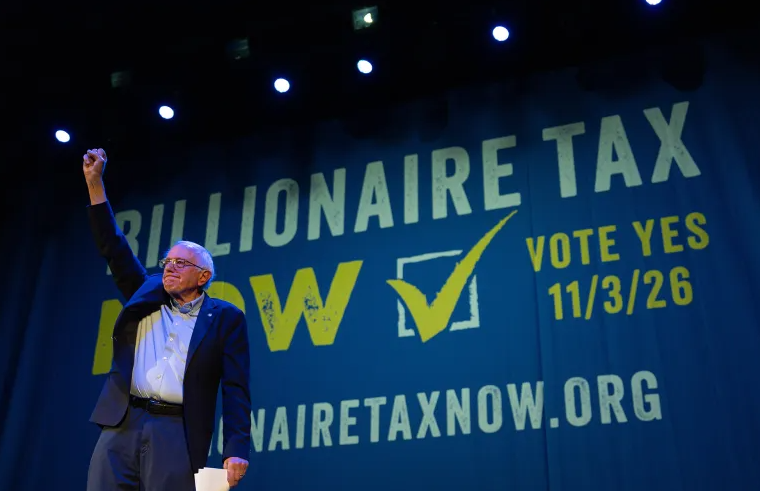
California voters will decide in November whether to approve Proposition 40, a one-time 5% tax on roughly 200 billionaires, a measure backers say is needed to offset Trump-era cuts to the state’s healthcare system. But instead of uniting progressive forces around a classic “tax the rich” message, the proposal has split Democratic allies, labor unions, and healthcare advocates, turning what might have been a simple left-versus-right ballot fight into a messy intraparty battle. The measure is championed by SEIU-United Healthcare Workers West and is expected to raise about $100 billion if approved.
The measure’s main sponsor, union leader Dave Regan, says the billionaire tax is necessary to prevent “the imminent collapse of California’s health care system” after federal Medicaid cuts signed into law last year by President Donald Trump. In that sense, Proposition 40 is being sold as both a fiscal rescue plan and a political counterattack against Trump. California’s generous healthcare programs and Democratic identity might seem like fertile ground for such a proposal. But the initiative now faces resistance not just from billionaires and business interests, but from some of the very Democratic groups that might normally be expected to support it.
The California Teachers Association and the State Building and Construction Trades Council of California have come out against Prop. 40, while Teamsters California and AFSCME California support it. Other important labor groups, including the California Federation of Labor Unions and SEIU California, had not weighed in at the time of the report. Establishment Democrats are divided as well. Gov. Gavin Newsom opposed the measure and tried, unsuccessfully, to persuade Regan to take it off the ballot. Days before the withdrawal deadline, Regan publicly offered to reduce the tax to 2% over two years, but Newsom rejected the offer.
That failed negotiation raised doubts about the campaign’s strength. Political observers suggested Regan may have been looking for a way to avoid an expensive fight. His union had already spent $31 million to gather 1.6 million signatures to qualify the measure. But once it made the ballot, the campaign ran into a problem: the politics of taxing billionaires proved more complicated than the slogan. Critics argue that a retroactive wealth tax could scare off wealthy residents, make California’s already volatile tax base even less stable, and indirectly threaten funding for schools, infrastructure, clinics, and public safety.
The opposition is also extremely well funded. Several billionaires, including Google co-founder Sergey Brin, have contributed a combined $118 million to a committee that qualified two other ballot measures aimed at undercutting the billionaire tax. That means Proposition 40 will not be debated in isolation. Voters may face competing measures and a flood of advertising designed to confuse, dilute, or defeat it. Polling adds more uncertainty: a March UC Berkeley Institute of Governmental Studies poll found 52% support, 33% opposition, and 15% undecided, which campaign veterans see as soft support rather than secure majority backing.
The measure has also lost support from groups that might otherwise favor more healthcare revenue. For example, the Planned Parenthood Affiliates of California and the California Medical Association oppose Prop. 40, along with the California Primary Care Association and California School Boards Association. In a joint statement, those groups warned that the tax could worsen budget volatility and threaten public funding rather than strengthen it. That criticism strikes at the measure’s central pitch: supporters say it protects healthcare, while opponents say it could destabilize the finances that healthcare and other public systems rely on.
Proposition 40 has become a test not just of whether Californians want to tax billionaires, but of whether Democrats can agree on how to do it. What began as a populist healthcare measure has evolved into a broader fight over fiscal stability, political leverage, and the limits of progressive taxation in a state already dependent on volatile high-income tax revenue.