Google has successfully connected a new transatlantic subsea cable between Portugal and the United States, expanding the digital infrastructure that supports rapidly growing demand for cloud computing, artificial intelligence and international data traffic. The project strengthens Portugal’s ambition to become one of Europe’s most important technology and data-center hubs.
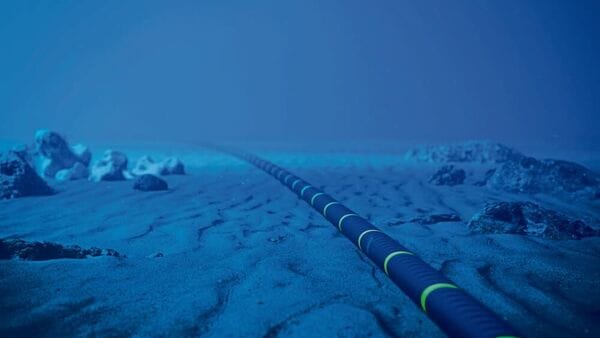
The cable, called Nuvem, takes its name from the Portuguese word for “cloud.” It connects Myrtle Beach, South Carolina, with the Portuguese coastal city of Sines, traveling through Bermuda and the Azores. The approximately 7,000-kilometer—or 4,350-mile—system contains 16 fiber pairs and has a total planned capacity of about 384 terabits per second. That enormous capacity is designed to support rising data use on both sides of the Atlantic.
Subsea cables are essential to the modern global economy. Although internet communication may appear wireless to consumers, more than 95% of international data traffic travels through cables installed beneath the oceans. These networks carry everything from video calls and financial transactions to cloud applications and information processed by artificial-intelligence systems. By introducing another direct connection between North America and Europe, Nuvem is expected to improve network capacity, reliability and resilience.
Google said the project forms part of a broader strategy to invest in the infrastructure that supports Europe’s digital economy. As companies and governments adopt more AI tools, their demand for data processing, storage and rapid transmission is increasing dramatically. High-capacity cables allow data centers in different regions to communicate more efficiently while reducing dependence on a limited number of existing routes.
The landing in Sines is especially important for Portugal. Located south of Lisbon on the Atlantic coast, the city is becoming a major center for subsea connectivity and technology investment. Portugal already has two significant intercontinental cable connections: Google’s Equiano system, which extends to South Africa through several African countries, and EllaLink, which connects Sines with Brazil. Nuvem adds a direct route to the United States, giving Portugal stronger links with Europe, Africa and the Americas.
Portuguese officials view the project as part of a national strategy to attract data centers, AI companies and digital infrastructure investment. State Reform and Innovation Minister Gonçalo Matias described Portugal as Europe’s natural Atlantic gateway and a meeting point among three continents. The government also believes that additional cable capacity can strengthen Europe’s digital sovereignty by making its communications infrastructure more diversified and less vulnerable to disruption.
Portugal’s renewable-energy resources provide another important advantage. The country has relatively abundant hydroelectric, solar and wind generation, which could help power the energy-intensive data centers required by cloud and AI services. More than 2.6 gigawatts of data-center capacity is currently under development.
The largest project in the pipeline is the 1.2-gigawatt Start Campus development in Sines. It is expected to benefit from Microsoft’s planned investments in artificial-intelligence infrastructure and could expand considerably in the coming years. The combination of international cables, renewable electricity, available land and access to European markets is transforming Sines from a traditional port and industrial center into a potential digital gateway.
The Nuvem cable represents more than a new internet connection. It demonstrates how AI growth is reshaping global infrastructure and encouraging governments to compete for data centers, cloud investment and strategic communications networks. For Google, the cable increases the capacity and resilience of its services. For Portugal, it offers an opportunity to establish itself as a central bridge connecting the digital economies of Europe, Africa and the Americas.