More than six years after the COVID-19 pandemic began, newly released diary entries from Dr. Anthony Fauci have revived the bitter political and scientific dispute over the virus’s origins. Senator Rand Paul, the Republican chairman of the Senate Homeland Security and Governmental Affairs Committee, published more than 1,000 pages of Fauci’s private pandemic-era notes and argued that they reveal a contradiction between what the former federal health official considered privately and what he later told the American public.
The documents cover Fauci’s daily activities from late 2019 through 2022, when he directed the National Institute of Allergy and Infectious Diseases and became one of the country’s most prominent voices on the pandemic. Paul focused particularly on a February 2020 entry describing a conference call among Fauci and leading scientists who were examining whether SARS-CoV-2 could have emerged naturally or been connected to laboratory research in Wuhan, China. Fauci wrote that there was not complete agreement among the participants about the virus’s origins.
Paul says that uncertainty shows Fauci privately took the laboratory-leak hypothesis more seriously than he later acknowledged. He has repeatedly accused Fauci of helping suppress discussion of a possible connection to the Wuhan Institute of Virology and of misleading Congress about U.S.-funded coronavirus research. Fauci has consistently rejected those allegations, and his lawyers have described Paul’s campaign as a politically motivated effort to secure his prosecution.
The diaries, however, also contain passages in which Fauci says he believed a natural animal-to-human transmission was much more likely, while continuing to keep an open mind about a laboratory accident. Scientific experts interviewed by NPR said this evolution reflects normal scientific reasoning during the early stages of an outbreak, when evidence is incomplete and researchers test multiple possibilities before reaching stronger conclusions. They cautioned that initial uncertainty should not automatically be treated as proof of deception or misconduct.
Other entries appear broadly consistent with Fauci’s public statements. In January 2020, he wrote that the Wuhan market probably amplified transmission rather than serving as the location of the first human infection, while still saying the virus had likely crossed from animals into people. He used nearly identical language publicly several weeks later. This weakens the argument that his private and public positions were entirely different, although it does not resolve the larger controversy surrounding early scientific communications.
The diaries also provide a broader account of Fauci’s turbulent relationship with President Donald Trump. Fauci described moments when Trump appeared deeply concerned about the health crisis, as well as later confrontations over testing, rising case numbers and the seriousness of the outbreak. He also recorded details about advising White House officials when Trump contracted COVID-19 and experienced concerning oxygen levels.
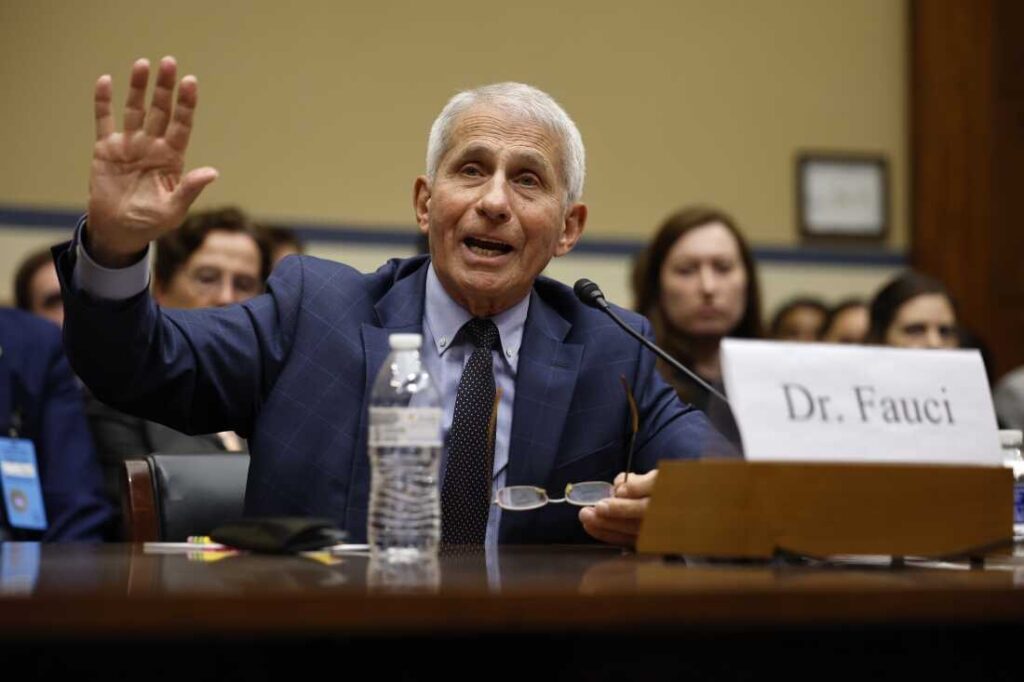
The dispute intensified when Fauci appeared before Paul’s committee and invoked the Fifth Amendment, refusing to answer questions after being subpoenaed. Fauci said he had already provided extensive testimony and believed Paul was trying to obtain statements that could be used to prosecute him. His refusal added new political drama but did not establish guilt or validate the senator’s accusations.
The origin of COVID-19 remains unresolved. The World Health Organization has said the weight of available scientific evidence favors zoonotic transmission, although it continues to maintain that all credible hypotheses should remain open because China has not provided all the information needed for a definitive conclusion. Some U.S. agencies favor a laboratory origin, often with low or moderate confidence, while others support natural emergence.
Overall, Fauci’s diaries offer a revealing record of uncertainty, institutional pressure and political conflict during the pandemic. They provide material for renewed scrutiny but do not conclusively prove either a cover-up or a laboratory origin. Instead, they demonstrate how an unresolved scientific question has become inseparable from partisan battles over trust, accountability and the federal government’s pandemic response.