The Trump administration’s military campaign against suspected drug-smuggling vessels has failed to meaningfully reduce the supply of cocaine entering the United States, according to assessments from the Drug Enforcement Administration, Pentagon briefings and interviews with American and Latin American officials. Although President Donald Trump has repeatedly claimed that Operation Southern Spear nearly eliminated maritime drug trafficking, internal findings indicate that cocaine remains widely available, highly pure and relatively inexpensive.
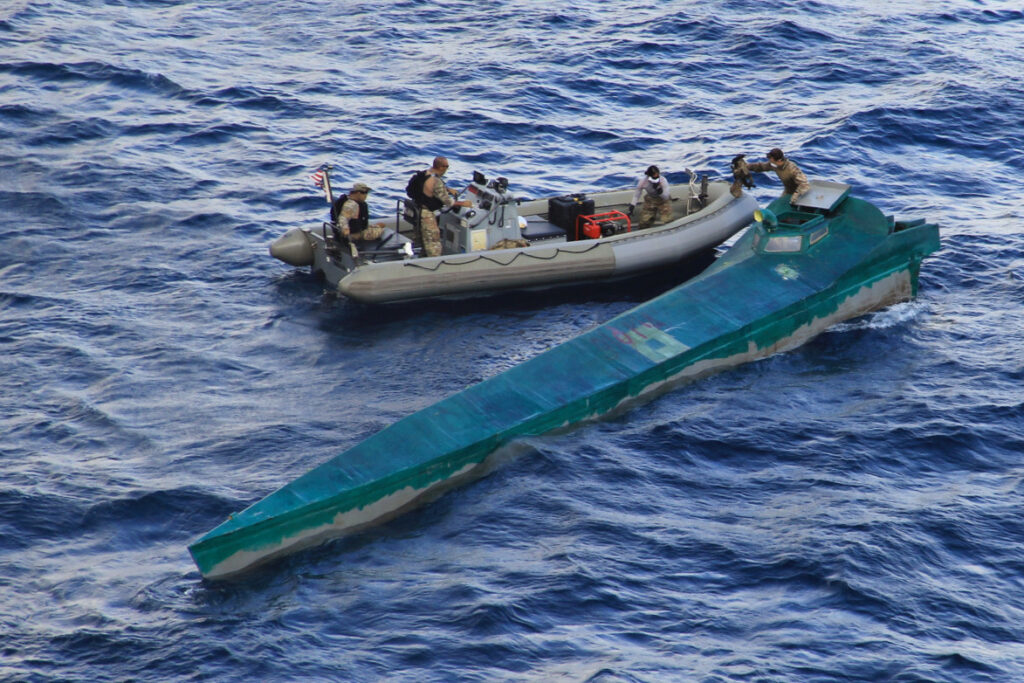
Launched in 2025, Operation Southern Spear represents a major shift from traditional law-enforcement interdictions toward direct military attacks on vessels suspected of transporting narcotics through the Caribbean Sea and eastern Pacific. U.S. forces have struck at least 67 boats and killed at least 221 people. Administration officials describe the campaign as part of a broader war against “narco-terrorist” organizations, arguing that lethal force imposes costs on criminal networks and deters future smuggling attempts.
However, a DEA assessment concluded that the strikes have not produced a lasting change in cocaine prices, availability or purity in the United States. Early disruptions briefly pushed prices higher and contributed to violence along certain trafficking routes, but those effects disappeared as criminal organizations adjusted. Smugglers increasingly abandoned small, fast boats operating in international waters and shifted toward larger vessels, routes closer to coastlines and commercial ports where American forces are less likely to attack.
Traffickers have also expanded their use of aircraft. According to the assessment, planes are leaving clandestine airstrips near the Colombian-Venezuelan border and flying east toward Guyana and Suriname to avoid U.S. naval patrols. Officials compared the pattern to squeezing one side of a balloon: pressure placed on one trafficking method simply causes criminal networks to expand elsewhere. Some smugglers reportedly wait for American warships to leave an area before launching their vessels.
Evidence from the U.S. drug market also challenges claims of success. Pentagon officials told lawmakers that seized cocaine continues to show high purity, suggesting dealers are not facing shortages that would force them to dilute their supplies. In Florida, wholesale cocaine prices have reportedly fallen by about half over five years, another indication that the market remains well supplied. Local authorities in the Florida Keys say packages of narcotics continue washing onto beaches and appearing near homes.
Global production is reinforcing this supply. Coca cultivation and cocaine manufacturing have reached record levels, particularly in Colombia. From 2014 to 2024, the land used for coca cultivation reportedly tripled, while estimated cocaine production quadrupled. Because the trade remains extraordinarily profitable, traffickers can absorb the loss of individual boats, pay significantly higher transportation costs and continue moving large quantities through alternative routes.
The military strategy may also be complicating conventional investigations. DEA agents traditionally use captured smugglers and low-level informants to identify routes, coordinators and senior cartel leaders. Now, some intelligence sources are reportedly being withdrawn from operations because they could be killed in U.S. strikes. Destroying boats can also eliminate drugs, electronic equipment and witnesses that would otherwise support prosecutions.
The Pentagon and White House continue to defend the campaign, saying traffickers’ changing behavior proves that military pressure is creating disruption. Yet even the general overseeing the operation has acknowledged that strikes alone are probably not the most effective tool. Critics also question their legality, cost and strategic value, arguing that traditional Coast Guard interdictions can seize drugs, preserve evidence and capture suspects without automatically killing those aboard.
The findings suggest that Operation Southern Spear has changed how cocaine is transported without significantly reducing how much reaches the United States. The campaign has imposed risks and expenses on traffickers, but record production, strong demand and adaptable criminal networks have prevented those disruptions from becoming a lasting supply decline.