
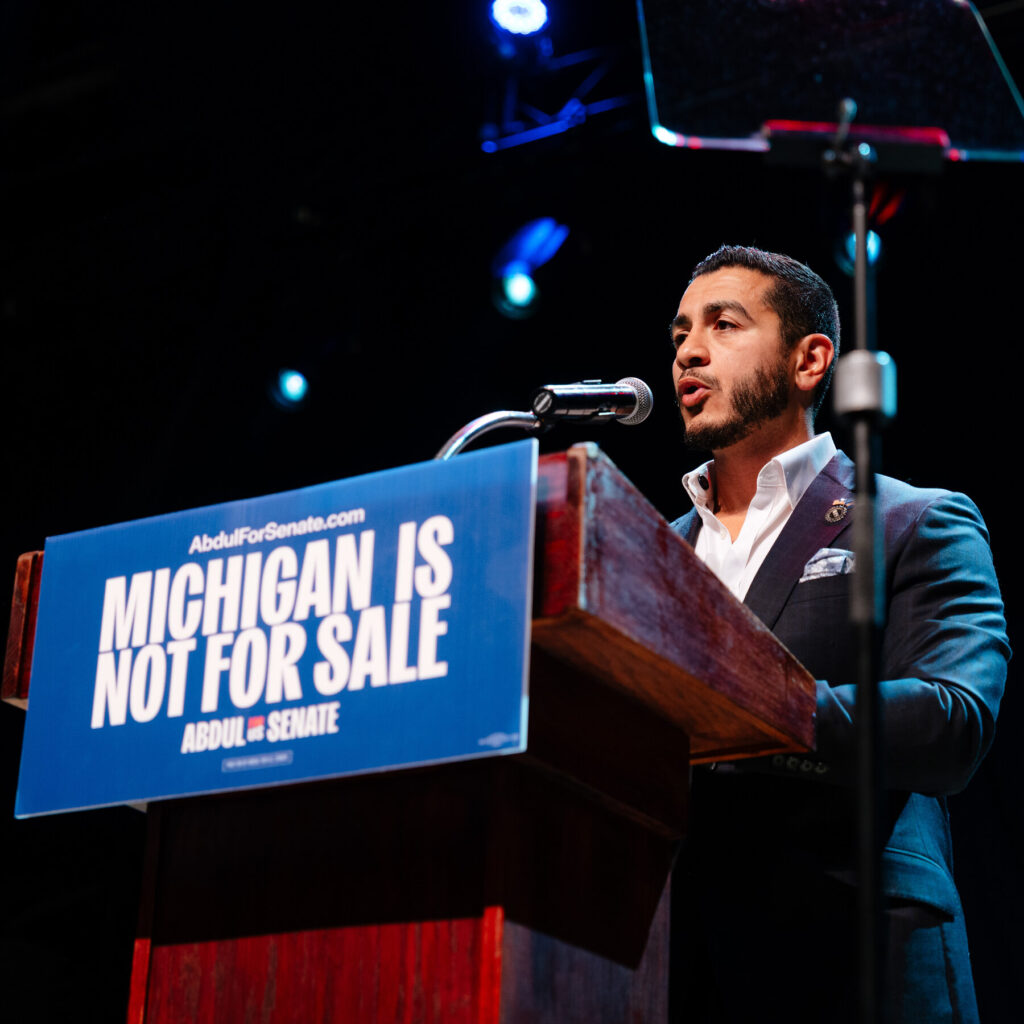
Former Detroit health director Abdul El-Sayed has won the Democratic nomination for the U.S. Senate in Michigan, defeating four-term Representative Haley Stevens in one of the most closely watched and expensive Democratic primaries of the 2026 election cycle. El-Sayed’s narrow victory marks a major triumph for the progressive wing of the Democratic Party and sets up a high-profile general election against Republican Mike Rogers for the Senate seat being vacated by retiring Democratic Senator Gary Peters.
The race became a national test of the Democratic Party’s future direction. Stevens represented the party’s more moderate establishment and received endorsements from prominent Democratic leaders, including Michigan Governor Gretchen Whitmer, as well as support from major outside groups. El-Sayed, by contrast, ran on a progressive platform backed by Senator Bernie Sanders, Representative Alexandria Ocasio-Cortez and grassroots organizations. Despite being significantly outspent, he built a campaign centered on economic populism, healthcare reform and reducing the influence of large political donors.
According to unofficial results, El-Sayed secured approximately 48.5% of the vote, while Stevens received about 47.5%, making it one of the closest statewide Democratic primaries in recent Michigan history. His victory surprised many political observers because Stevens entered the race with greater name recognition, stronger fundraising and extensive institutional backing. Analysts say El-Sayed’s campaign successfully mobilized younger voters, progressives, organized labor and many Muslim and Arab American communities concentrated in southeast Michigan.
The contest also reflected broader debates inside the Democratic Party over campaign strategy and policy priorities. Stevens emphasized electability, experience and a more centrist message designed to appeal to suburban swing voters. El-Sayed argued that Democrats should focus more aggressively on affordability, universal healthcare, labor rights and reducing corporate influence in politics. He repeatedly contended that energizing voters with bold economic proposals would prove more successful than pursuing moderate compromises.
Foreign policy became another defining issue during the campaign. El-Sayed criticized U.S. policy toward Israel and called for major changes in Washington’s approach to the conflict in Gaza. His positions attracted strong support from progressive activists while also drawing criticism from pro-Israel organizations that invested heavily in Stevens’ campaign. The primary ultimately became one of the most expensive Democratic contests of the year, with tens of millions of dollars spent by candidates and outside groups seeking to influence the outcome.
Republicans quickly sought to capitalize on the result. Mike Rogers, a former congressman endorsed by President Donald Trump, immediately portrayed El-Sayed as too progressive for a politically competitive state like Michigan. Republican strategists believe El-Sayed’s support for policies such as Medicare for All and other progressive reforms could alienate moderate and independent voters during the general election. Democrats, however, argue that his grassroots appeal and focus on economic issues could energize voters who have become frustrated with traditional politics.
The Senate race is expected to become one of the most competitive in the country because Michigan remains a pivotal battleground state. Control of the Senate could depend on the outcome, making the contest a national priority for both parties. Political observers expect record fundraising, extensive advertising and repeated visits from national political leaders throughout the fall campaign.
Beyond Michigan, El-Sayed’s victory is being viewed as an important signal about the Democratic Party’s evolving identity. His success demonstrates that progressive candidates can compete successfully in major Midwestern swing states despite facing well-funded establishment opponents. At the same time, the close result underscores continuing ideological divisions within the party over how best to win national elections.
The Michigan primary represents more than a single Senate nomination. It serves as a referendum on the Democratic Party’s future direction, highlighting the growing strength of its progressive movement while setting the stage for one of the most consequential Senate elections of 2026.