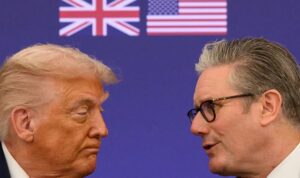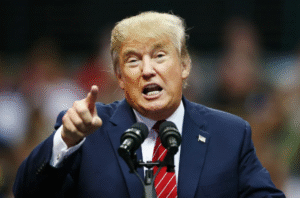
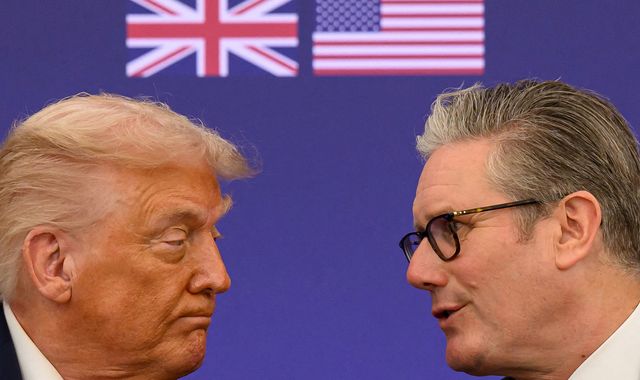
President Donald Trump has threatened to impose a “big tariff” on the United Kingdom if it does not scrap its digital services tax, escalating a transatlantic trade dispute centered on how governments tax large American technology companies. Trump said the United States would retaliate if Britain continues targeting firms such as Apple, Google, and Meta through the levy.
The tax at the center of the dispute is Britain’s 2% digital services tax, which the UK rolled out in 2020. It was designed to capture revenue from large digital platforms that generate significant business in Britain even if their corporate structures allow much of their taxable profit to be booked elsewhere. Both Trump and former President Joe Biden criticized the tax, showing that U.S. opposition to it extends across party lines, largely because Washington sees these kinds of digital levies as falling disproportionately on American tech giants.
Trump’s latest comments raise the temperature by moving from criticism to an explicit threat of retaliation. Seemingly, he told reporters at a White House event, “If they don’t drop the tax, we’ll probably put a big tariff on the UK.” That wording matters because it frames the issue not as a technical tax disagreement but as a possible trade punishment against one of America’s closest allies. It also suggests the administration is willing to use tariffs as leverage far beyond traditional disputes over goods such as steel, autos, or agriculture.
The timing adds another layer of sensitivity. Trump made the remarks ahead of a visit next week by Britain’s head of state, King Charles. Trump also said he believes the monarch could help repair Washington’s relationship with the British, that means the tariff threat lands at a diplomatically awkward moment, just as both sides would normally want to emphasize symbolism, stability, and partnership.
At a deeper level, the dispute reflects a broader fight over the digital economy. European governments and some other U.S. allies have argued for years that traditional tax rules have not kept pace with global tech companies whose profits and users are spread across borders. The United States, by contrast, has often argued that country-by-country digital taxes unfairly single out American firms and should instead be replaced by broader international tax agreements. Trump’s threat fits squarely into that long-running clash over who gets to tax digital commerce and on what terms.
If the dispute escalates, the consequences could extend beyond technology. A large tariff on British goods would affect trade more broadly and could damage an already strained U.S.-UK relationship. Even if no tariff is immediately imposed, Trump’s warning injects uncertainty into transatlantic business planning and could put additional pressure on British officials to reconsider a tax that has both revenue and political significance at home.
Overall,the episode is a reminder that Trump remains willing to use tariffs as a negotiating weapon, even against close partners. The immediate issue is Britain’s digital services tax, but the larger story is about trade leverage, the taxation of global technology firms, and the fragility of U.S.-UK relations at a moment that might otherwise have been focused on diplomacy and pageantry.