The rapid buildout of AI-driven data centers is emerging as a new source of inflation in the U.S. economy, adding fresh price pressure just as earlier waves from tariffs and energy shocks have started to ease. The data-center boom is helping create a “third wave” of inflation, driven by enormous spending on AI infrastructure and by rising demand for the physical inputs needed to build and run that infrastructure.
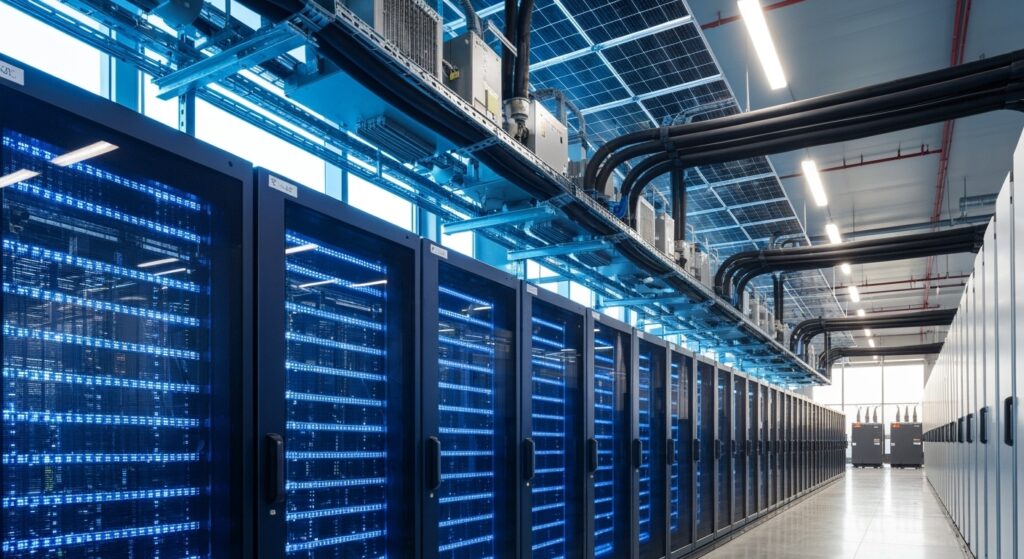
At the center of the story is scale. Major technology companies such as Alphabet, Amazon, Meta, Microsoft and Oracle are on track to spend about $741 billion this year on AI-related infrastructure. That spending is not abstract software investment. It requires semiconductors, memory chips, cooling systems, power equipment, backup batteries, land, construction materials and large amounts of electricity. As demand for those inputs jumps, prices rise not only for data-center operators but also for households and businesses competing for the same resources.
One of the clearest inflation channels is chips. Earlier this month that Morgan Stanley warned of AI-driven “chipflation,” with memory-chip prices increasing sixfold over the past year as data-center demand pulls supply away from consumer electronics. That squeeze is already spreading into the broader economy, pushing up costs for smartphones, PCs and other devices. The prices for goods using related components, including consumer electronics and software, are now rising after decades in which tech products often got cheaper over time.
Electricity is another major source of pressure. Data centers consume enormous power, and their expansion is putting stress on local grids and wholesale power markets. Data centers are projected to account for nearly half of U.S. growth in power demand through 2030, helping push electricity prices higher for ordinary consumers as well as businesses. Americans are increasingly wary of AI-driven data centers, with many concerned about the strain on energy systems and local infrastructure.
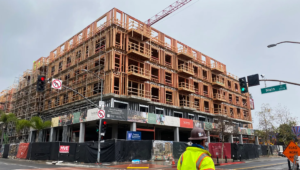
The inflationary impact goes beyond chips and power. The AI buildout is also increasing demand for electricians, plumbers, specialized construction crews, batteries, server racks, transformers and cooling equipment. That means the inflation is spreading through labor markets and industrial supply chains, not just through consumer gadgets. This pressure may keep inflation elevated even if it does not produce the kind of extreme spike seen during the pandemic.
There is an important timing issue here. Economists generally agree that AI could eventually boost productivity, which in the long run might reduce inflation by helping companies produce more efficiently. But those gains are still years away. Right now, the dominant effect is the opposite: a huge burst of capital spending chasing scarce physical resources. AI building boom is a new force complicating the inflation outlook, as investors reassess how much this construction surge may keep prices sticky.
Overall, the data-center boom shows that AI’s economic impact is no longer only about jobs, productivity or stock-market enthusiasm. It is beginning to show up in real-world prices for power, equipment, devices and construction. The broader message is that the AI boom may be digital in promise, but it is intensely physical in execution, and that physical buildout is becoming a meaningful new inflation force in the American economy.