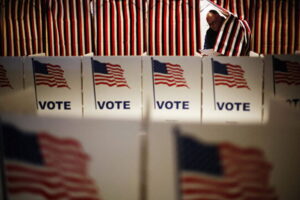
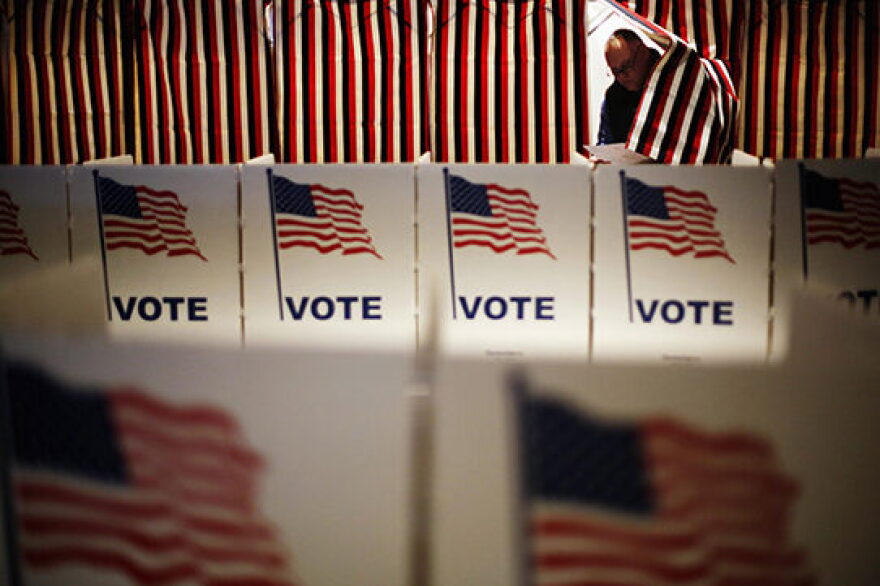
Americans have begun casting ballots in the 2026 midterm elections, opening the final phase of a campaign that will determine control of Congress and shape the remaining two years of President Donald Trump’s term.
Early in-person voting started Friday in Virginia, while voters in states including Minnesota and South Dakota can begin casting absentee ballots in person. Over the coming weeks, millions more Americans will gain access to early voting ahead of Election Day.
The campaign is unfolding against an unusually turbulent political and economic backdrop.
Among the most prominent concerns is the cost of living. Americans continue to confront elevated prices for necessities, including groceries and energy. The prolonged U.S.-Iran conflict has added another source of economic uncertainty by disrupting global energy markets and contributing to higher fuel costs.
The war itself has also become an important campaign issue.
More than six months after the conflict expanded into direct fighting between U.S. and Iranian forces, Iran remains defiant and instability has spread across important Middle Eastern shipping routes. The Houthis’ advances in Yemen have further complicated the situation by threatening maritime traffic around the Red Sea.
Trump has maintained that the conflict is moving toward a resolution, but the continuing fighting has created political pressure as voters prepare to decide control of Congress.
Election administration is another major source of controversy.
Trump has continued challenging mail voting and advocating changes to election procedures, while his administration has pursued efforts to identify potential noncitizen voters and obtain voter information from states.
Election officials, meanwhile, say voting systems are secure and that they are prepared to administer the midterms accurately. Documented cases of noncitizen voting remain extremely rare.
The election is also taking place after an extraordinary round of mid-decade congressional redistricting. Republican-led Texas initiated a new map after pressure from Trump, while California and other states subsequently pursued their own changes.
According to data, roughly one in 10 Americans will live in a different congressional district this fall than they did during the 2024 election, demonstrating how significantly the political map has changed.
Other disputes surrounding the Trump administration are unfolding simultaneously.
The Kennedy Center remains at the center of a legal fight after Trump sought recognition of his name at the institution. A federal judge recently ordered the center to provide at least 30 days’ notice before undertaking major physical changes, including potential demolition. The building has also been temporarily closed because officials say structural deterioration presents safety risks.
A separate controversy involves the United States Institute of Peace, which filed an emergency motion seeking to prevent the administration from carving Trump’s name into the facade of its Washington headquarters. The dispute follows an earlier court battle over the administration’s takeover of the congressionally created institution.
These controversies are adding to an already crowded political environment dominated by economic anxiety, immigration, foreign policy, artificial intelligence and disputes over presidential authority.
The central question, however, remains control of Congress.
Every House seat is on the ballot, along with a portion of the Senate. The results will determine the balance of legislative power for the final half of Trump’s current term.
A change in congressional control could significantly alter Washington’s direction, particularly by affecting legislation, investigations and congressional oversight of the administration.
With voting now underway, the 2026 midterms have moved beyond campaign strategy and polling.
Americans are beginning to make their choices at a moment when domestic economic pressures, an unresolved overseas war and disputes over presidential power are converging into a consequential test of the country’s political direction.