
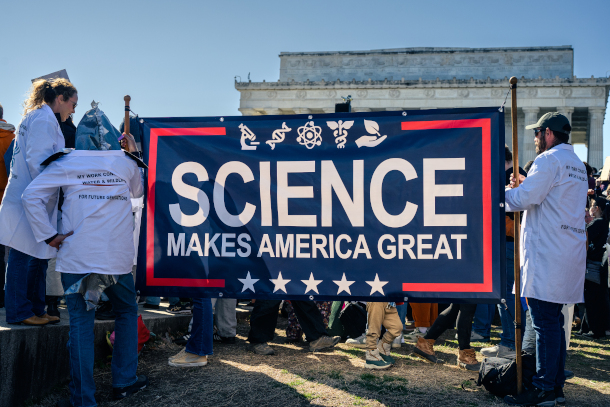
The results of the 2026 U.S. midterm elections could mark a turning point for American science, as Democrats regain control of both chambers of Congress and researchers look toward Washington for stronger protections against federal funding cuts and political interference.
According to a November 4 report, the election outcome has raised expectations that lawmakers will challenge scientific policies introduced during President Donald Trump’s administration.
However, scientists and policy experts recognize that congressional victories do not automatically reverse executive decisions or guarantee additional research funding.
Democratic control of the House of Representatives and Senate creates opportunities for greater congressional oversight of federal science agencies. Lawmakers can hold hearings, investigate administrative decisions and question officials responsible for research funding.
These powers could become particularly important for institutions affected by changes to federal grant programs, staffing reductions and shifting scientific priorities. Universities, laboratories and independent researchers depend on predictable government support to conduct long-term investigations.
Political uncertainty can interrupt experiments, discourage international collaboration and complicate efforts to recruit scientific talent. For researchers, the new congressional balance offers a potential opportunity to restore stability.
One of the most consequential questions concerns future appropriations for agencies such as the National Institutes of Health, National Science Foundation and Department of Energy.
These institutions support research spanning cancer treatments, artificial intelligence, climate science, advanced manufacturing and fundamental discoveries. Congress has substantial authority over federal spending, allowing lawmakers to influence how much funding agencies receive.
Democratic leaders could seek to protect research budgets, challenge proposed reductions and strengthen financial support for scientific institutions. Nevertheless, budget legislation requires political negotiation, and President Trump retains the power to veto bills.
Even when Congress approves additional resources, disputes over implementation can create further uncertainty. Beyond funding, researchers are concerned about political involvement in scientific decision-making.
The debate includes how federal agencies establish research priorities, evaluate grant applications and communicate scientific findings. Supporters of stronger congressional oversight argue that government-funded research should be guided by scientific evidence and transparent evaluation.
The administration, meanwhile, has emphasized changing federal priorities, reducing spending and increasing accountability across government programs. These competing approaches could produce significant disagreements over the role of federal institutions in supporting research.
Congressional investigations may bring greater public attention to those disputes, but they cannot independently resolve every conflict. Although Democrats now control Congress, the executive branch continues to oversee federal agencies and implement many administrative policies.
Lawmakers can pass legislation and conduct investigations, but reversing certain executive actions may require additional legal proceedings or administrative decisions. Major policy changes could also face presidential vetoes. Consequently, researchers should not assume that the election results will immediately restore discontinued programs or reverse previous staffing decisions.
The practical effects will depend on negotiations, legislation, judicial rulings and the administration’s response. The political debate carries consequences beyond universities and laboratories.
Federal research investments contribute to medical innovation, technological competitiveness, economic growth and national security. Uncertainty surrounding scientific funding can also influence private investment and America’s ability to attract international researchers.
Other countries are expanding their scientific capabilities, making sustained investment increasingly important for maintaining U.S. leadership. The election results therefore raise a broader question about whether Washington can establish a stable, bipartisan commitment to scientific progress.
For the American research community, Democratic control of Congress represents an opportunity rather than a guaranteed solution. The coming legislative battles will help determine whether the United States strengthens its scientific institutions or continues facing uncertainty over the future of federally supported discovery.