Kansas voters delivered one of the most significant political upsets of the 2026 midterm elections, electing Democratic candidate Adam Hamilton to the U.S. Senate and ending a 94-year period without a Democratic Senate victory in the traditionally Republican state.
Hamilton, a prominent Methodist pastor and political newcomer, defeated incumbent Republican Senator Roger Marshall on November 3, marking a historic shift in Kansas politics and demonstrating the growing competitiveness of previously reliable Republican strongholds.
The victory represents a major achievement for Democrats, who invested heavily in the contest as part of their nationwide effort to reshape the balance of power in Washington. Hamilton became the first Democrat elected to the U.S. Senate from Kansas since George McGill won in 1932.
When the race was at approximately 10:25 p.m., Hamilton held about 52% of the vote compared with Marshall’s 45%, with roughly 90% of ballots counted. Libertarian candidate David Graham received approximately 3%.
Hamilton performed particularly well in populous counties surrounding Kansas City and Wichita, while Marshall maintained stronger support across rural communities. The geographic divide reflected changing political preferences in Kansas, where suburban voters have become increasingly influential in statewide elections.
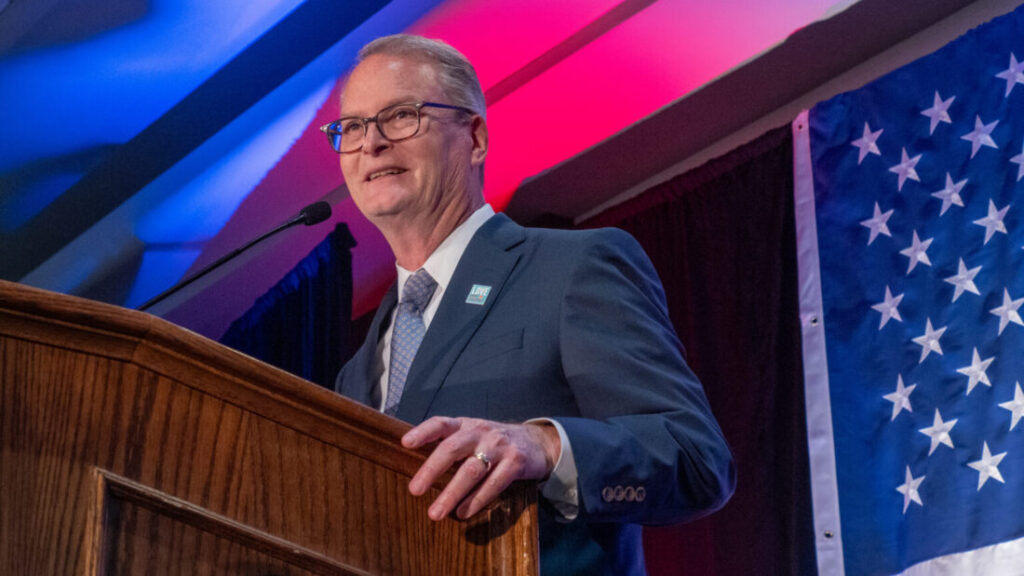
Before entering politics, Hamilton was best known as the founding pastor of the Church of the Resurrection, one of the nation’s largest United Methodist congregations. His campaign emphasized affordability, healthcare access, political cooperation and opposition to the war in Iran.
Rather than relying exclusively on traditional Democratic messaging, Hamilton presented himself as an independent-minded candidate focused on practical solutions. That approach helped him appeal to moderate voters, independents and some Republicans dissatisfied with national political developments.
Outgoing Democratic Governor Laura Kelly praised Hamilton’s credibility and his ability to connect with voters across partisan divisions. Marshall, a former obstetrician-gynecologist elected to the Senate in 2020, entered the election with the advantages of incumbency and Kansas’ longstanding Republican voting record.
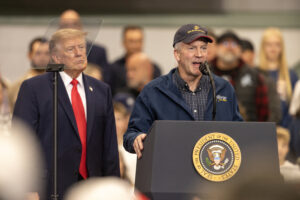
He emphasized his support for President Donald Trump, agricultural interests and policies benefiting rural communities. Trump and Vice President JD Vance made repeated campaign appearances in Kansas as Republicans attempted to strengthen Marshall’s position.
However, Hamilton’s growing support transformed the contest from a race initially considered safely Republican into a nationally watched battleground.
The University of Virginia’s Center for Politics changed its rating from safely Republican in July to leaning Democratic immediately before Election Day. Marshall ultimately conceded defeat, acknowledging the outcome after a closely watched campaign.
The Senate contest became the most expensive election campaign in Kansas history, attracting approximately $110 million in spending. Both parties and affiliated organizations devoted substantial resources to advertising, fundraising and voter outreach.
Election officials also reported strong participation in the state’s largest counties. By midafternoon on Election Day, approximately 55% of registered voters in Johnson County had cast ballots, alongside 44% in Sedgwick County and 35% in Wyandotte County.
The figures demonstrated intense public interest in a race that could influence the Senate’s political composition. Hamilton’s election illustrates how economic concerns, candidate credibility and political dissatisfaction can reshape established electoral patterns.
His victory also challenges the assumption that Kansas is uniformly Republican in federal elections. For Democrats, the result offers evidence that competitive candidates can attract broader coalitions even in traditionally conservative states.
For Republicans, it raises questions about the effectiveness of relying on presidential endorsements and longstanding partisan loyalties. As Hamilton prepares to represent Kansas in Washington, his historic victory marks a turning point for the state and underscores how quickly America’s political landscape can change when voters demand a different direction.