The United States has officially welcomed its 64th national park, transforming Arizona’s spectacular Chiricahua National Monument into Chiricahua National Park and bringing renewed national attention to one of the American Southwest’s most remarkable natural landscapes.
President Donald Trump signed the Chiricahua National Park Act on October 20, 2026, establishing the country’s first newly designated national park in nearly six years.
Located in southeastern Arizona near the town of Willcox, the approximately 12,000-acre destination is celebrated for its extraordinary volcanic formations, diverse wildlife and cultural history. The designation recognizes a landscape that has been federally protected for more than a century while creating new opportunities for tourism and regional economic development.
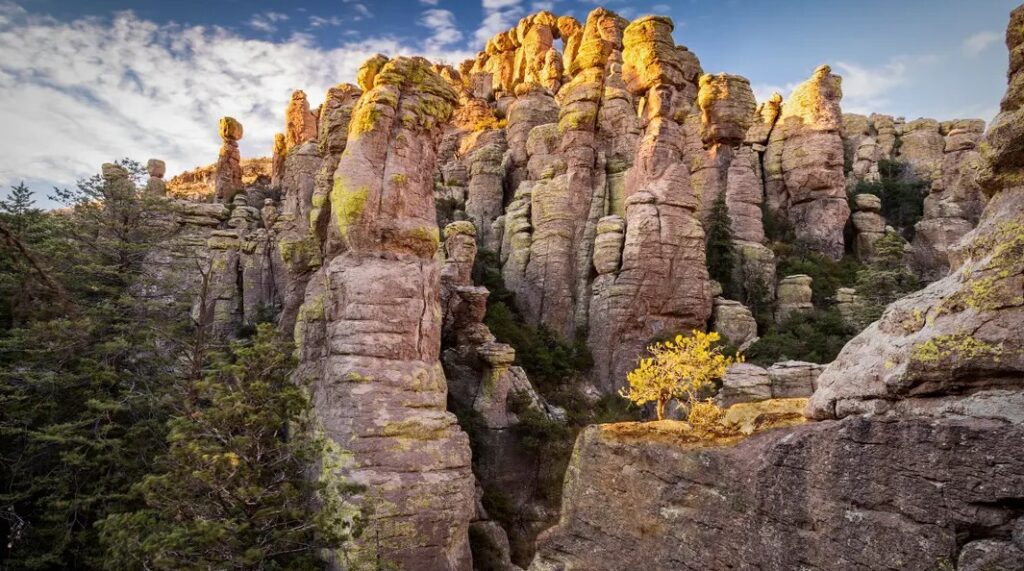
Often called the “Wonderland of Rocks,” Chiricahua is famous for towering stone pinnacles, balanced boulders and narrow rock formations sculpted by volcanic activity and erosion.
Approximately 27 million years ago, a massive volcanic eruption deposited layers of ash across the region. Over millions of years, geological processes transformed the hardened material into the distinctive formations visitors see today. The park lies within the Chiricahua Mountains, part of a series of isolated mountain ranges known as “sky islands.”
These mountains rise above the surrounding desert, creating dramatic differences in elevation, temperature and vegetation. The resulting environment supports an unusually rich variety of ecosystems, including desert grasslands, oak woodlands and pine forests.
Wildlife includes black bears, coatimundis, deer and nearly 200 bird species, making the area particularly attractive to birdwatchers and nature enthusiasts. Chiricahua’s federal protection dates to 1924, when President Calvin Coolidge established the area as a national monument.
The landscape also holds deep cultural significance as part of the ancestral homeland of the Chiricahua Apache people. For generations, Indigenous communities maintained spiritual, cultural and historical connections to the mountains.
The area’s more recent history includes homesteading families, ranching communities and the development of Faraway Ranch, which preserves elements of Arizona’s settlement history. The new national park designation does not expand the existing boundaries or automatically provide additional funding.
Instead, it formally recognizes the area’s national significance while maintaining its existing conservation framework. The legislation also includes provisions protecting access to traditional cultural and religious sites.
Tourism officials expect the new designation to attract greater attention from travelers exploring America’s national parks. Visitors can discover more than 17 miles of hiking trails winding through volcanic formations, forested canyons and scenic overlooks.
The Bonita Canyon Scenic Drive offers access to some of the park’s most dramatic landscapes, including Massai Point. Other popular activities include camping, wildlife photography, birdwatching and stargazing beneath exceptionally dark night skies.
Chiricahua now joins Grand Canyon, Saguaro and Petrified Forest as Arizona’s fourth national park. Its comparatively small size and remote location offer an experience distinct from the country’s larger, more heavily visited destinations.
The designation could benefit nearby communities through increased visitor spending at hotels, restaurants, transportation businesses and outdoor recreation services. Supporters believe national park recognition will help introduce Chiricahua to travelers who might otherwise overlook southeastern Arizona.
The legislation followed years of bipartisan advocacy, including efforts by Republican Representative Juan Ciscomani and Democratic Senators Mark Kelly and Ruben Gallego. However, conservation organizations have warned that greater popularity could place additional pressure on trails, visitor facilities and sensitive habitats.
Some advocates have also raised concerns about staffing and funding challenges throughout the National Park Service.
They argue that increased recognition should be accompanied by sufficient resources to protect natural landscapes and manage growing visitor demand. Chiricahua’s transformation represents a significant moment for American conservation and outdoor recreation.
Its extraordinary geological features, biodiversity and Indigenous history make it a distinctive addition to the nation’s most celebrated protected landscapes. The designation also demonstrates how long-established national monuments can gain broader recognition without changing their physical boundaries.
As America’s newest national park welcomes greater attention, its long-term success will depend on balancing tourism growth, cultural preservation and environmental protection for future generations.