
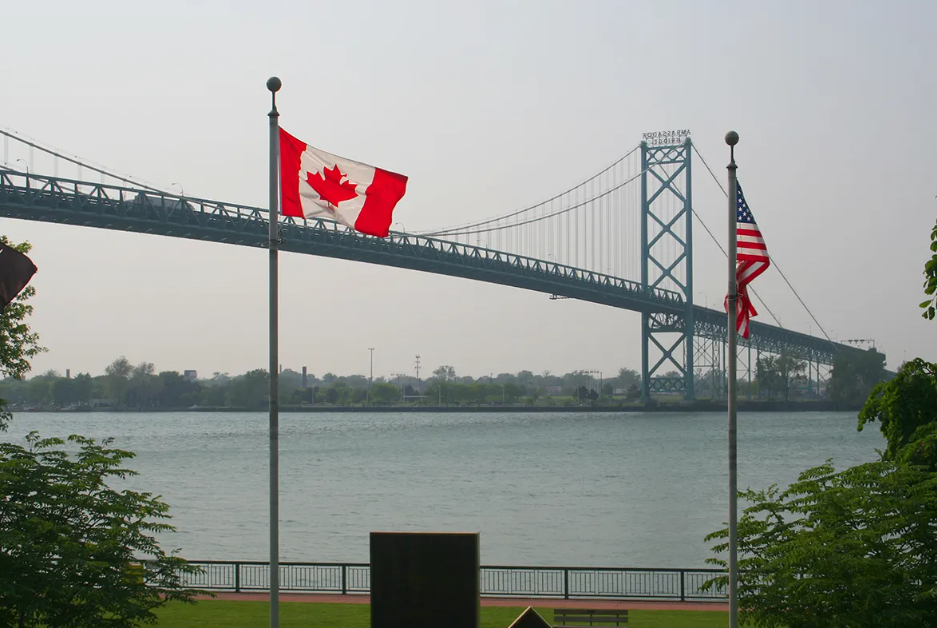
President Donald Trump has suggested that the United States and Canada could soon reach an agreement to resolve their escalating trade dispute, offering a potential breakthrough after months of tariffs, economic uncertainty and growing concerns among American manufacturers.
Speaking at a political rally in Port Huron, Michigan, on October 25, 2026, Trump expressed confidence that negotiations with Canada would produce an agreement, although he provided no specific timetable or details about possible concessions.
The announcement came just nine days before the November 3 midterm elections, when voters will determine control of Congress amid continuing debates over inflation, manufacturing employment and the administration’s trade policies.
During the rally, Trump defended his decision to impose higher tariffs on Canadian products, arguing that previous trade arrangements had disadvantaged American businesses and workers.
The president claimed that Canada had benefited unfairly from its economic relationship with the United States and suggested that Canadian officials were now prepared to make significant concessions.
However, the administration did not announce a finalized agreement, and Canadian Prime Minister Mark Carney’s office did not immediately respond to requests for comment. The dispute intensified in August after trade negotiations between Washington and Ottawa collapsed.
The United States subsequently introduced additional tariffs affecting approximately $20 billion worth of Canadian products, including construction materials and consumer goods. Canada responded with retaliatory measures targeting American exports, prompting further tariff increases from Washington.
Some American tariffs reached 50% on selected products, increasing pressure on businesses dependent on cross-border trade. Michigan has become an important focal point of the dispute because of its close economic relationship with Canada.
The state’s automotive industry relies on integrated North American supply chains, with vehicle components frequently crossing the international border during production.
Additional import duties can increase manufacturing expenses, complicate supply agreements and create uncertainty for companies planning future investments.
Port Huron, located near the Canadian border, represents the economic interconnectedness of the two countries.
Although Trump won substantial support in the surrounding region during the 2024 presidential election, local businesses and manufacturers have experienced consequences from the tariff dispute.
For the automotive sector, a potential trade agreement could provide greater predictability regarding production costs and cross-border commerce. However, the economic impact would depend on the final terms of any agreement.The tariff dispute has also created disagreements within the Republican Party ahead of the midterm elections.
Michigan Republican candidate Mike Rogers, who is competing against Democrat Abdul El-Sayed, has expressed concerns about the consequences of tariffs for automobile manufacturers.
Rogers has praised Trump’s broader trade strategy for encouraging manufacturing investments, citing companies such as Chevrolet and Detroit Diesel.
Nevertheless, he acknowledged that automotive tariffs remain a concern and suggested that some aspects of the policy require adjustment.
His position illustrates the challenges facing candidates who support domestic manufacturing initiatives while representing communities dependent on international trade.
The dispute has also affected other border states, including Maine. Republican Senator Susan Collins successfully urged the administration to remove certain tariffs affecting industries important to her state’s economy.
Those exemptions demonstrate how regional economic concerns are influencing the administration’s trade decisions.Since returning to the White House, Trump has made tariffs a central component of his economic strategy.
The administration argues that import duties can protect domestic industries, encourage investment and strengthen America’s negotiating position. Critics contend that tariffs can increase costs for businesses and consumers, disrupt established supply chains and provoke retaliation against American exporters.
The disagreement with Canada is particularly significant because the two countries maintain one of the world’s most extensive trading relationships. Manufacturing, agriculture, energy and transportation industries depend heavily on cross-border commerce.
Consequently, prolonged trade restrictions can create economic consequences beyond the industries directly targeted. Trump’s comments suggest that negotiations may be moving toward a possible resolution, but important questions remain unanswered.
Neither government has announced the terms of a comprehensive agreement, and it remains uncertain which tariffs might be reduced or eliminated. For American businesses, greater clarity could support investment decisions and reduce uncertainty surrounding international supply chains.
For Canadian exporters, an agreement could restore more predictable access to the American market. The timing also gives the dispute considerable political significance as voters prepare for the midterm elections. Ultimately, the outcome of the U.S.–Canada trade negotiations could influence manufacturing costs, cross-border investment and the future direction of North American economic cooperation.