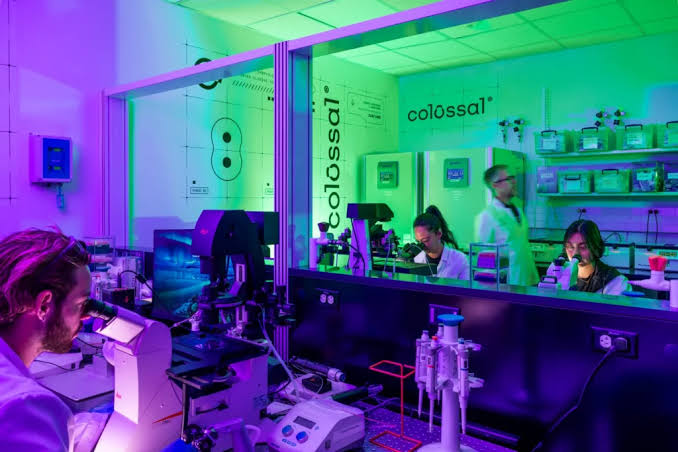
A U.S. government agency and biotech company Colossal Biosciences have announced plans to build a genomic and cellular “BioVault” for every species protected under the Endangered Species Act, creating a cryogenic archive of living cells, reproductive tissues and genomic DNA from roughly 2,300 threatened and endangered animals and plants. The initiative is being launched through an agreement between Colossal and the U.S. Fish and Wildlife Service, with the goal of preserving biological material before species decline beyond recovery.
The project is meant to function as a long-term scientific safety net. BioVault will store biological samples in liquid nitroge at minus 321 degrees Fahrenheit (minus 196 degrees Celsius) at Colossal’s Dallas headquarters and at additional sites. The idea is to preserve not only DNA sequences, but also living cellular material that could later support assisted reproduction, genetic management of wild populations, and in the most extreme cases, future restoration if a species disappears entirely. Colossal CEO Ben Lamm said that the technology now exists to make this possible at scale for the first time.
Colossal describes the BioVault as a kind of modern scientific “Noah’s Ark,” though with a very different mission. Rather than storing pairs of animals, it would preserve the biological building blocks of species before they are lost. Lamm said the goal is preparation and preservation: protecting the “blueprint of life” before a population collapses. That framing reflects a broader shift in conservation thinking, where genetic preservation is increasingly seen as a complement to habitat protection, breeding programs and species recovery plans.
The scope of the initiative is one reason it stands out. Biobanking for animals and plants has existed for decades, but it has usually been fragmented, with zoos, universities, government agencies and private institutions each maintaining separate collections under different rules and standards. Colossal argues that this has created a patchwork system where some species are oversampled while others have no preserved material at all. The BioVault is intended to become a national program with a government mandate, rather than another isolated collection.
The Fish and Wildlife Service will play a central role in deciding priorities. The agency will lead the partnership, set conservation priorities, and provide the field networks and regulatory authority needed to gather samples at this scale. U.S. Fish and Wildlife Service Director Brian Nesvik said the collaboration could help show how biobanking and genomics can strengthen existing conservation tools and support the long-term resilience of imperiled species. No completion date has been set.
Funding is also notable. Colossal will spend tens of millions of dollars to build and operate the BioVault, and that the memorandum of understanding does not obligate federal funds. The company said the archive is planned as a permanent public resource, with standardized samples and open-access genomic data available to scientists worldwide. The stored material would remain owned by the organizations that provide it, according to Colossal’s chief animal officer Matt James.
The project also fits Colossal’s broader ambitions. The company is known for “de-extinction” efforts and previously said it had genetically engineered the extinct dire wolf. That connection may draw both interest and skepticism. Supporters may see the BioVault as a practical conservation tool with clear current uses, while critics may worry about tying endangered-species preservation too closely to speculative de-extinction narratives.
BioVault represents an ambitious attempt to preserve endangered biodiversity before it vanishes. By creating a centralized, cryogenic archive for the living cells and genetic material of protected species, the project aims to give future conservationists more options to study, manage and possibly restore species at risk of disappearing.