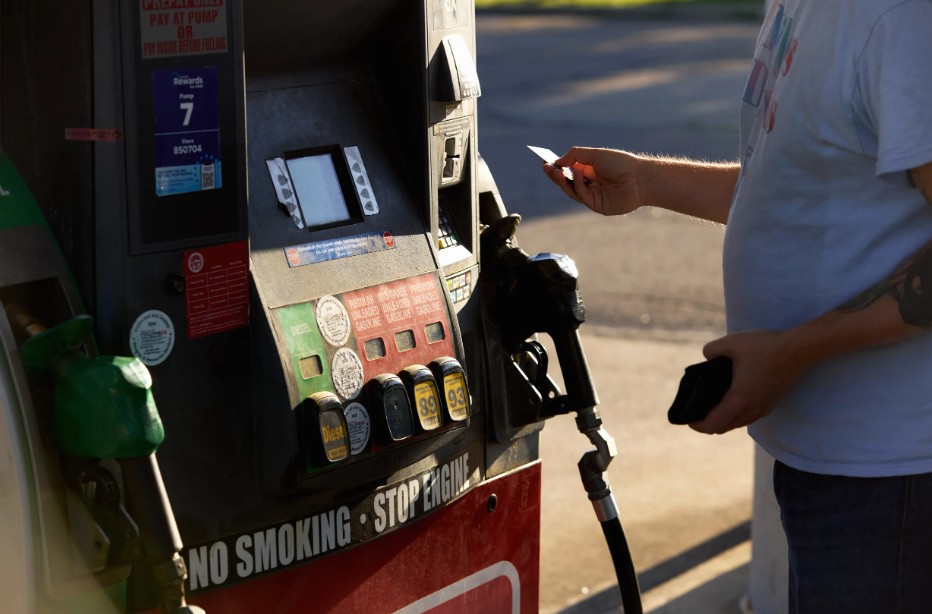
Record diesel prices and sharply higher gasoline costs are prompting state governments across the United States to consider suspending fuel taxes, as policymakers search for ways to provide immediate relief to households, truckers and businesses before the November midterm elections.
The pressure comes after months of disruption in global energy markets connected to the U.S.-Israeli war with Iran and restrictions on oil shipments through the Strait of Hormuz.
Diesel reached a record national average of $6.53 per gallon. Regular gasoline averaged approximately $4.49 per gallon, up dramatically from $2.98 on February 28.
Because diesel powers much of America’s trucking, agriculture, construction and freight industries, its rising price has consequences extending far beyond gas stations. Higher transportation expenses can eventually increase the cost of groceries and other consumer goods.
With voters already concerned about the cost of living, fuel taxes have become an increasingly prominent political issue.
Georgia, Kentucky and Indiana have already temporarily reduced or suspended fuel taxes. Officials in other states, including Ohio and Massachusetts, are considering similar measures.
In Ohio, Republican gubernatorial candidate Vivek Ramaswamy has proposed suspending the state’s fuel taxes for 90 days. Democratic opponent Amy Acton has also called for an emergency gas-tax holiday.
Ohio currently collects approximately 38.5 cents per gallon on gasoline and 47 cents on diesel. Ramaswamy estimates suspending those taxes would reduce state revenue by approximately $678 million, although outgoing Republican Gov. Mike DeWine has said the cost could approach $750 million.
The debate illustrates the central problem with fuel-tax holidays.
While temporarily eliminating taxes can lower prices for motorists, those taxes finance highways, bridges and other transportation infrastructure. Governments therefore must either accept lower transportation revenue or replace the missing money from other sources.
Massachusetts faces the same dilemma.
Democratic Gov. Maura Healey has proposed suspending the state’s 24-cent-per-gallon gasoline tax for two months. The measure would cost approximately $120 million, which Healey proposes replacing with revenue generated by Massachusetts’ surtax on high earners.
Her Republican challenger, Mike Minogue, has also advocated a gas-tax holiday.
Some lawmakers remain skeptical. Massachusetts House Speaker Ron Mariano, a Democrat, argues that suspending the tax could undermine infrastructure funding while providing relatively limited savings to individual motorists.
Previous experiments offer mixed evidence.
Kentucky temporarily reduced its gasoline tax by 10 cents per gallon during May and June. The policy cost the state’s road fund approximately $20 million each month, while critics questioned how much consumers actually noticed the savings.
Economists at the Penn Wharton Budget Model, however, estimated that consumers could receive about 72% of the savings created by a federal gas-tax suspension, with suppliers capturing the remainder.
Indiana provides another comparison.
Its fuel-tax suspension reduced taxes by more than 60 cents per gallon, and Indiana motorists were paying an average of $3.94 per gallon this week — roughly 45 cents less than drivers in neighboring Ohio. The policy, however, required hundreds of millions of dollars in replacement funding.
The debate has also reached Washington.
President Donald Trump has called for temporarily suspending federal fuel taxes — currently about 18 cents per gallon for gasoline and 24 cents for diesel — but Congress has not reached an agreement. Conservative House Republicans recently attempted to force a vote, while Republican leaders remained divided over how lost transportation revenue would be replaced.
The situation presents policymakers with a difficult tradeoff.
Suspending fuel taxes can provide visible short-term relief when Americans fill their tanks, but it does not address the global energy disruptions responsible for much of the underlying price increase. It can also create substantial holes in transportation budgets.
With fuel prices elevated and the November elections approaching, however, governors and candidates from both parties are increasingly treating temporary tax relief as one of the few tools available to reduce prices quickly.
The result is turning the gas pump into both an economic pressure point and an increasingly important issue in the 2026 midterm campaign.