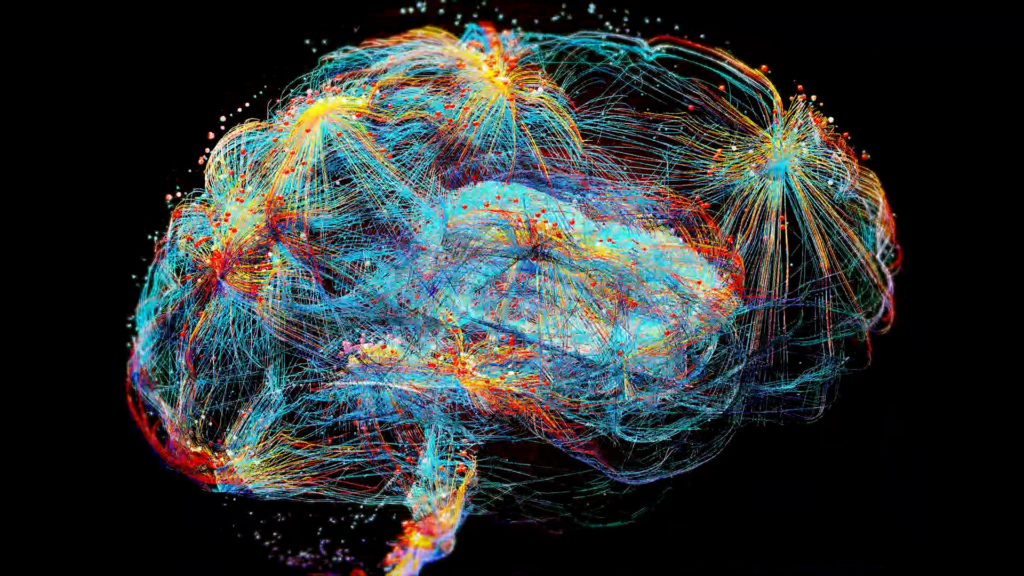
An international team of neuroscientists has achieved a major scientific milestone by creating the most detailed cellular map yet of the basal ganglia, a network deep within the human brain involved in movement, decision-making, emotions and learning.
Published on November 12, 2026, the research provides new insights into neurological and psychiatric conditions, including Parkinson’s disease, schizophrenia, bipolar disorder and Huntington’s disease.
The findings could eventually help scientists develop treatments that target specific brain cells rather than affecting broad regions of the nervous system. The project involved hundreds of researchers from more than 50 institutions working through the U.S. National Institutes of Health’s BRAIN Initiative.
Scientists analyzed approximately 25.5 million cells across human and nonhuman primate brains, with additional research involving mice. Using advanced genetic sequencing and imaging technologies, researchers identified different cell populations, examined their molecular characteristics and mapped their locations within the basal ganglia.
The resulting atlas provides an unprecedented view of how this complex brain network is organized. The research appears in 27 scientific papers published across several journals, including Cell and Neuron.
One important finding involves a previously unidentified type of neuron potentially associated with schizophrenia. Researchers also identified cellular populations connected to genetic risks for bipolar disorder, depression and post-traumatic stress disorder.
These discoveries could help explain why certain psychiatric conditions develop and why individuals respond differently to treatment. Rather than treating the brain as a collection of large anatomical regions, scientists can now investigate specific cell populations and their molecular functions.
However, identifying an association does not establish that a particular neuron causes a disorder. Additional studies will be necessary to determine how these findings translate into clinical applications.
The research has already produced encouraging experimental results involving Parkinson’s disease. Scientists developed a targeted gene therapy designed to act on a specific population of cells within the striatum, an important component of the basal ganglia.
In mouse models of Parkinson’s disease, the treatment increased production of a dopamine precursor, helping alleviate movement-related symptoms. Importantly, the targeted approach produced benefits comparable to a broader treatment while reducing certain side effects.
The findings suggest that more precise therapies could eventually improve effectiveness and safety. Nevertheless, the experiments were conducted in animals, and the approach has not yet demonstrated clinical benefits in humans.
The atlas also offers new perspectives on autism. Researchers comparing brain-cell data identified potentially important changes in specific striatal populations that conventional analytical methods might overlook.
The findings suggest that brain circuits beyond the cerebral cortex deserve greater attention in autism research. Scientists additionally examined how cell populations develop and change with age, providing insights into the biological processes underlying neurological disorders.
One of the project’s most significant contributions is its openly accessible scientific database. Researchers worldwide can explore detailed information about brain-cell identities, genetic activity and anatomical locations. The initiative also introduced computational tools designed to make these complex datasets easier to analyze.
These resources could accelerate future discoveries and support collaborations between universities, medical institutions and biotechnology companies. Although the atlas represents a remarkable achievement, scientists caution that translating laboratory discoveries into approved treatments will require years of additional research.
Researchers must establish which cellular changes contribute directly to disease and determine whether targeted interventions are safe and effective in humans.