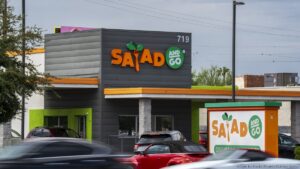
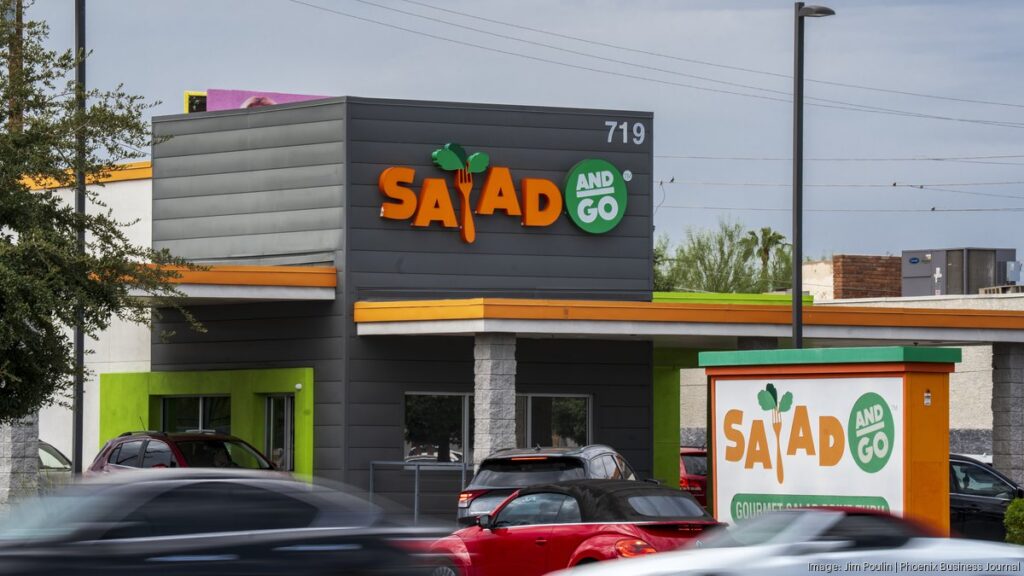
Arizona-based restaurant chain Salad and Go has begun auctioning equipment from 68 closed locations across four states, marking another significant development in the company’s ongoing bankruptcy proceedings.
The liquidation follows the closure of the chain’s restaurants earlier in 2026 and reflects the financial difficulties facing a business that once attracted attention for its affordable, drive-thru healthy meals. According to media, the auctions are intended to recover money for creditors as the company winds down its operations under Chapter 11 bankruptcy protection.
The liquidation includes former Salad and Go locations in Arizona, Texas, Oklahoma and Nevada. Commercial kitchen equipment, refrigeration systems, preparation tables, sinks, shelving, furniture and small appliances are among the assets available to buyers.
TAGeX Brands, through its RestaurantEquipment.Bid platform, is managing the auctions. The company is targeting restaurant operators, caterers, food-service businesses and entrepreneurs interested in purchasing commercial equipment. Auction closing dates vary by location, with some sales concluding in November and others extending through December.
The Phoenix metropolitan area accounts for the largest concentration of affected restaurants, with approximately 30. Additional auctions involve locations in Dallas, Houston, Tucson, Oklahoma City and Las Vegas.
Founded in Arizona during the early 2010s, Salad and Go developed a distinctive business model centered on convenient, relatively inexpensive salads, wraps and breakfast items. Its compact drive-thru restaurants were designed to serve customers quickly while offering alternatives to traditional fast food. The company eventually expanded to approximately 160 locations across four states.
However, aggressive expansion and costly real estate decisions, particularly in Texas, contributed to mounting financial pressure. The company filed for Chapter 11 bankruptcy protection in August 2026 after struggling with debt and operational challenges.
Although Chapter 11 can allow businesses to reorganize, Salad and Go’s proceedings have increasingly focused on selling assets and satisfying creditors. One notable consequence of the company’s collapse has been the redistribution of its restaurant properties. Drive-thru coffee chain 7 Brew acquired the majority of Salad and Go’s former store sites. Other beverage businesses, including Dutch Bros and Swig, also obtained locations or lease interests.
These transactions reflect continued demand for drive-thru real estate, even as individual restaurant brands face financial difficulties. Former Salad and Go properties may offer attractive opportunities because their layouts already accommodate vehicle-based ordering and service.
The liquidation extends beyond individual restaurant kitchens. On November 12, a federal bankruptcy judge in Houston authorized the auction of 110 pieces of food-processing equipment from Salad and Go’s Texas preparation facility. The company estimated the original total cost of that equipment at more than $13.6 million. Branford Auctions LLC will oversee the sale.
That figure represents the estimated equipment cost, not a guaranteed recovery amount. Actual proceeds will depend on buyer demand and auction results. Despite the liquidation, the brand may not disappear permanently.
One of Salad and Go’s co-founders has acquired the company’s intellectual property and two East Valley locations in an effort to revive the concept. However, a potential relaunch would be separate from the former chain’s extensive restaurant network. The scope, timing and commercial success of any revival remain uncertain.
Salad and Go’s bankruptcy illustrates the financial risks associated with rapidly expanding restaurant chains. Even a recognizable brand with a distinctive menu can encounter serious difficulties when property commitments, operating expenses and debt obligations exceed sustainable revenue.
For creditors, the auctions offer an opportunity to recover part of their investment. For competing restaurant operators, the liquidation creates opportunities to acquire equipment and established drive-thru locations.