
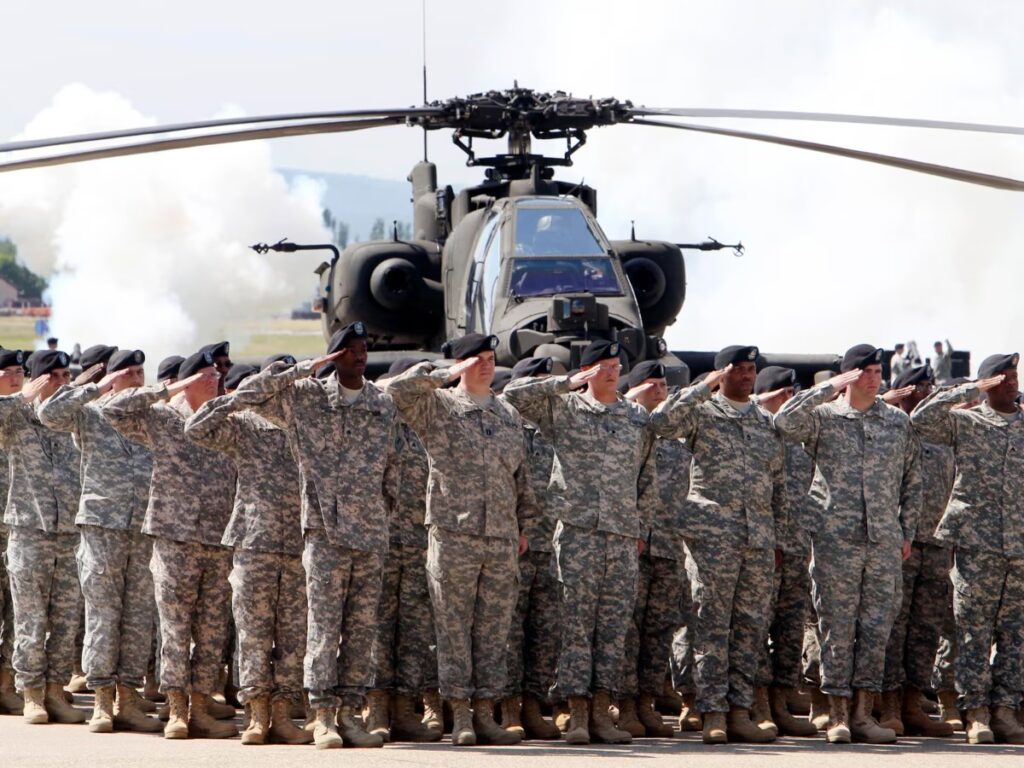
The United States is reportedly planning to accelerate the withdrawal of troops from bases in Europe, a move that could further strain relations with NATO allies and reshape the balance of transatlantic security. The German newspaper Welt am Sonntag said Washington will present the proposals to NATO partners next month, citing an unidentified Pentagon source. The report did not specify how much faster the withdrawal would be or which bases and countries could be affected.
The proposals are expected to be discussed at NATO’s upcoming Force Sourcing Conference, where allies coordinate military commitments and capabilities. The report adds to a growing series of U.S. moves suggesting that President Donald Trump’s administration wants Europe to carry more of its own defense burden.
This possible acceleration follows several earlier U.S. decisions that have already unsettled European governments. Earlier in May, the United States announced it would withdraw 5,000 troops from Germany, reducing its presence there after public tensions between Trump and German Chancellor Friedrich Merz over the Iran war. The move would return U.S. troop levels in Germany closer to where they stood before Russia’s 2022 invasion of Ukraine prompted a buildup.
The U.S. has also reportedly considered cutting back the forces and assets it makes available to NATO in a crisis. Seemingly, Washington planned to reduce strategic bombers, fighter jets, warships, mid-air refueling aircraft and submarine support that would be available to the alliance during emergencies. NATO officials acknowledged that Europe had relied heavily on the United States and said higher European defense spending could lead to a restructuring of military responsibilities.
The political backdrop is important. Trump has repeatedly criticized European allies for what he views as inadequate defense spending and insufficient support for U.S. policy, especially during the Iran conflict. At the Shangri-La Dialogue in Singapore, U.S. Defense Secretary Pete Hegseth again criticized NATO allies, particularly in Western Europe, for relying too heavily on American military power and urged members to raise defense spending to 3.5% of GDP.
For Europe, a faster U.S. pullout would be both a warning and a test. American troops, aircraft, logistics hubs, hospitals and command structures have long been central to NATO’s deterrence posture, especially against Russia. If Washington reduces its footprint more quickly, European countries may need to accelerate investments in air defense, logistics, intelligence, drones, heavy equipment and rapid deployment forces. The challenge is that building those capabilities takes time, money and political unity.
This raises questions about alliance credibility. Supporters of the U.S. shift argue that Europe must stop depending on Washington and take greater responsibility for its own security. Critics warn that sudden reductions could weaken deterrence, embolden adversaries and make NATO look divided at a dangerous moment. The risk is not only military, but symbolic: if allies begin to doubt U.S. commitment, Europe may be forced into a much more independent defense posture.
Overall, the Trump administration is moving from pressure to action. Washington is no longer only demanding higher European defense spending; it may be using troop withdrawals to force that change. Whether this strengthens NATO by making Europe more capable or weakens it by reducing U.S. leadership will depend on how fast the withdrawal happens and how prepared allies are to fill the gap.