Kuwait says Iranian drones struck its main airport, killing one person, wounding dozens and briefly shutting down air operations, in another dangerous test of the fragile ceasefire between Iran and the United States. The attack heavily damaged a passenger terminal at Kuwait International Airport and showed that Gulf countries once seen as safer havens are now increasingly exposed to the wider U.S.-Israeli war with Iran. Iran denied responsibility for the airport damage.
The victim was an Indian national, according to India’s embassy, while Kuwaiti authorities said 63 people were wounded, including passengers and airport workers. Some injuries were serious. Kuwait’s Defense Ministry said “a number of hostile drones” targeted a passenger building that had reopened only days earlier after a wartime closure. The airport later partially reopened, with Kuwait Airways flights moving through another terminal, but most other flights remained suspended.
Iran rejected Kuwait’s account. Iran’s Revolutionary Guard claimed the terminal had been damaged by a failed U.S.-made interceptor rather than by Iranian drones. U.S. Central Command called that claim false and described the strike as a “deliberate, calculated and unjustified attack.” Kuwait responded diplomatically as well as militarily, saying it would not tolerate the attacks and expelling two Iranian diplomats.
The attack came amid a broader exchange of fire across the Gulf. The U.S. military said Iranian missiles aimed at Kuwait broke apart before reaching their targets, and that American forces shot down multiple drones headed toward U.S. troops in the country. U.S. and Bahraini forces also intercepted missiles and drones fired toward Bahrain, which hosts the U.S. Navy’s 5th Fleet. Iran’s Revolutionary Guard acknowledged targeting the 5th Fleet headquarters and U.S. military facilities in another country.
The episode shows how unstable the ceasefire has become. President Donald Trump said negotiations continue to extend the truce, even as the United States launched strikes on an Iranian military ground control station on Qeshm Island in the Strait of Hormuz. Iran called the U.S. strike an act of aggression and warned that any hostile act would receive an immediate response. Trump described the situation bluntly, saying a ceasefire in that region sometimes means “shooting in a more moderate manner.”
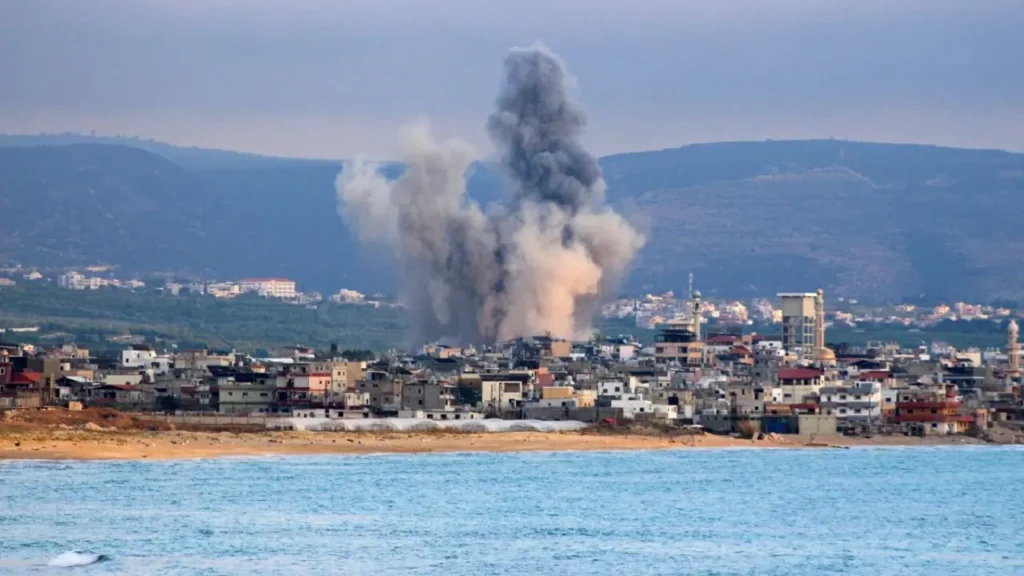
The conflict is also increasingly tied to Lebanon. Iran wants a separate ceasefire in Lebanon enforced before returning fully to talks, while Israel wants to keep the Iran and Lebanon issues separate. Israeli forces have pushed deeper into Lebanon, and Hezbollah has continued rocket and drone attacks even though a formal ceasefire remains officially in place. This has created friction between Washington and Israel, with Trump acknowledging that he had called Prime Minister Benjamin Netanyahu “crazy” during a tense phone call.
The broader risk is economic as well as military. Iran still has influence over the Strait of Hormuz, a critical route for oil, natural gas and fertilizer, while the U.S. continues its blockade of Iranian ports. Fuel prices remain high and the effects of the conflict are being felt beyond the Middle East.
Kuwait airport strike shows that the ceasefire is more symbolic than stable. Civilians, airports, U.S. forces, Gulf allies and energy markets are all being pulled into the conflict. The attack may push Washington, Tehran and regional mediators toward urgent diplomacy, but it also raises the danger that one miscalculation could turn a fragile truce into a wider regional war.