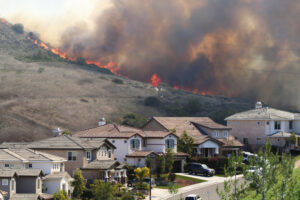
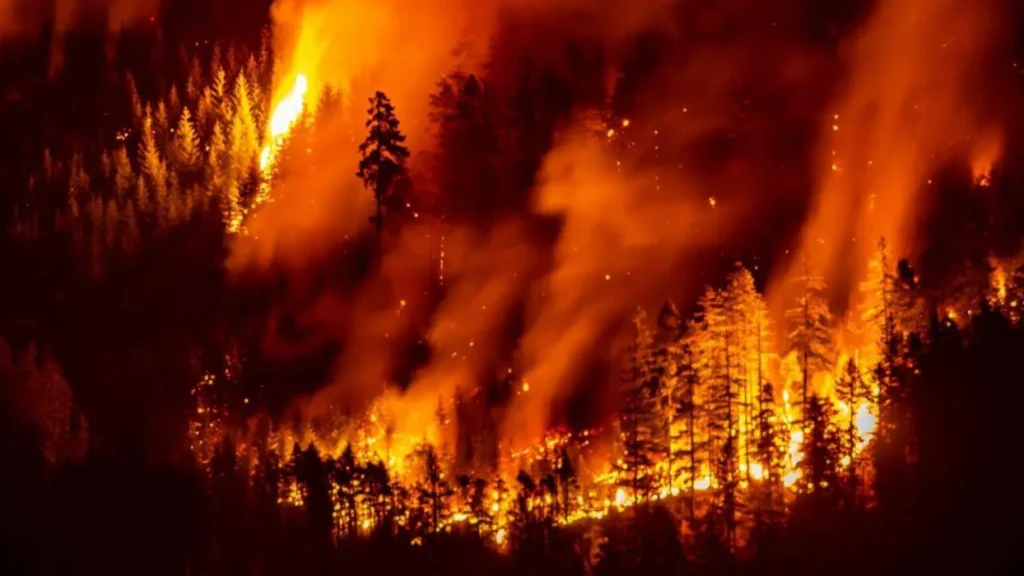
Worsening wildfires are reversing more than a decade of U.S. progress in reducing smog, making the air dirtier and more dangerous for millions of Americans. National ground-level ozone pollution fell sharply from 2003 to 2015 because of stricter regulations on power plants, cars and diesel engines. But since 2015, larger and more frequent wildfires have pushed ozone levels back upward.
Ground-level ozone, commonly known as smog, is not released directly by fires in the same way smoke particles are. Instead, it forms when sunlight reacts with pollutants such as nitrogen oxides and volatile organic compounds. Wildfires release many of these ingredients, allowing smoke plumes to create ozone pollution far from the flames. That means a fire in the West or Canada can worsen air quality hundreds or even thousands of miles away, affecting cities and communities that never see the fire itself.
The numbers are striking. A study finds that U.S. smog levels dropped by 11% between 2003 and 2015, but then rose by 4% as wildfire activity increased. If that trend continues, researchers warn that national smog levels could return to 2003 levels within about 20 years. That would erase much of the progress achieved through decades of air-quality regulation and public-health policy.
The health consequences are serious. Ozone can irritate the lungs, worsen asthma and other respiratory diseases, and increase the risk of premature death. The increase in wildfire-driven ozone is linked to an estimated 318 additional deaths per year from ozone exposure. That figure does not include all smoke-related harm, especially damage from fine particle pollution, which has also become a major public-health threat during severe wildfire seasons.
The study used artificial intelligence to fill gaps in traditional air-quality monitoring. EPA monitors do not cover every part of the country, especially rural areas and regions downwind of fires. Researchers used deep learning, satellite information and ground-level observations to model ozone trends nationwide with greater detail. NASA said the approach showed that fires have offset nearly four years of ozone-control gains nationally, with bigger setbacks in the West and Midwest.
Climate change is a major driver, though scientists say it is not the only cause. Hotter temperatures, drier vegetation and longer fire seasons make large wildfires more likely and more intense. Forest management, land-use patterns and ignition sources also matter. But the broader trend is clear: as fires grow, they are weakening one of America’s major environmental success stories — cleaner air.
The findings also show why wildfire smoke is no longer only a regional western problem. Recent Canadian wildfire seasons sent smoke across large parts of the United States, exposing millions of people to unhealthy air. When that smoke also helps create ozone, the damage becomes longer-lasting and more complex than the visible haze suggests.
The study warns that climate-driven fires are creating a new air-pollution era. Regulations reduced smog from cars, factories and power plants, but wildfire smoke is now pushing pollution back up. Without stronger climate action, better fire prevention, improved monitoring and more public-health protections, Americans may face dirtier, deadlier air despite decades of progress.